-
10.KAY GRIGGS: “MILITARY BROTHERHOOD” HER TESTIMONY ABOUT COLONEL GEORGE GRIGGS
COMMENTS FROM STREET TALK NETWORK ABOUT THIS POST-
1. Do your own research on the information provided and then come up with your own conclusions.
2. This article contains many names and other information that can be researched.
3. Trust your gut feeling on information provided as this post may contain slanted information.
4. Be sure to watch full interview of Kay Griggs.
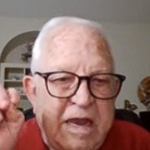
Kay Pollard Griggs became publicly known through a series of lengthy interviews recorded in 1998 with Michigan pastor Rick Strawcutter. She presented herself as the second wife of retired U.S. Marine Corps Colonel George Griggs and said that, during their marriage, she learned disturbing information from:
- Statements her husband allegedly made while
drinking. - A diary and papers she said belonged to him.
- Conversations she overheard among military
officers. - Her personal contact with people in military,
political, intelligence, and religious circles.
Her testimony concerned alleged assassinations, covert military operations, weapons and narcotics trafficking, psychological conditioning, sexual blackmail, and networks of powerful officers operating beyond lawful oversight.
The crucial qualification is that most of her extraordinary accusations have never been substantiated through official records, criminal convictions, congressional findings, or independent investigative reporting. They should therefore be described as Kay Griggs’s allegations—not established historical facts.
Who was Kay Griggs?
Kay usually identified herself as Katherine or Kay Pollard Griggs. She said she had studied history, moved in politically connected circles, and later married Colonel George Griggs.
Her principal public record is the approximately four-hour videotaped interview with Rick Strawcutter. The Library of Congress–affiliated WorldCat catalog describes the 1998 recording as covering allegations about “murder and assassination, drug running and weapons sales, brainwashing and mind control.” This catalog entry confirms that the interviews exist and how they were presented; it does not verify their allegations. WorldCat catalog record
Copies of the interview continue to circulate online, including this 1998 Kay Griggs interview. A lengthy unofficial transcript is also available through the SurvivorBB archive.
Who was her husband?
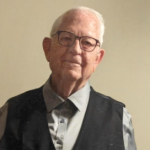
Kay identified her husband as retired Marine Colonel George Griggs. According to her account, he:
- Graduated from Princeton.
- Served during the Vietnam era.
- Held important staff and
special-operations-related assignments. - Worked around Fleet Marine Force Atlantic.
- Attended or worked with the NATO Defense College.
- Had connections to General Alfred M. Gray Jr.,
who later became commandant of the Marine Corps. - Served in or around Beirut and maintained a diary
of his activities there. - Had knowledge of psychological operations and
unconventional warfare.
A first-person account published by Maine Public confirms that a retired Marine Colonel George Griggs served in connection with Vietnam from December 1965 through June 1969. However, the available page does not independently establish every assignment Kay attributed to her husband, and the possibility of confusion among similarly named officers must be kept in mind. George Griggs’s Vietnam account
What Kay said she knew
1. An unofficial network inside the military
The central theme of her testimony was the existence of what she described as a secretive “brotherhood” or military fraternity. She portrayed it as a collection of officers, intelligence personnel, contractors, politicians, and wealthy private interests whose loyalty to one another sometimes exceeded their loyalty to constitutional government.
She alleged that members protected one another through:
- Patronage and preferential promotions.
- Control of sensitive assignments.
- Compromising personal information.
- Sexual blackmail.
- Threats, violence, and intimidation.
- Unofficial operations concealed behind legitimate
military activities.
She frequently connected this alleged network with elite universities, fraternities, intelligence circles, military academies, defense contractors, and private clubs. No authoritative investigation has established the existence of the unified organization she described.
2. Assassination and “wet work”
Griggs made the extremely serious claim that selected military and intelligence personnel were trained to carry out assassinations disguised as accidents, suicides, ordinary crimes, or acts committed by unrelated extremists.
She said her husband spoke about killings and about training or evaluating men used for such work. She associated these activities with special-operations personnel, including certain Marines and Navy SEALs.
She also claimed that her husband had direct knowledge of—and possibly personal involvement in—specific killings. One of her most sensational accusations concerned the 1984 murder of American University of Beirut president Malcolm Kerr. Griggs alleged her husband told her information connecting him to the killing.
That accusation has not been independently demonstrated. The publicly accepted historical account is that Kerr was shot by two gunmen in Beirut, with Islamic Jihad claiming responsibility. Kay’s allegation that her husband participated remains unsupported by publicly available official evidence.
3. Beirut and her husband’s diary
Kay said that a diary belonging to Colonel Griggs recorded meetings, names, telephone numbers, travel, and activities surrounding his time in Beirut. She regarded this diary as proof that he had relationships with people who later denied knowing him.
In the interview, she recounted confronting an officer whom she called General Joy after he allegedly denied knowing George. Kay said she then pointed to diary entries showing repeated meetings between the men.
This is potentially one of the most important parts of her story because a contemporaneous diary could be tested. Nevertheless:
- A complete authenticated copy has not been made
available through a recognized archive. - Handwriting, dates, and entries have not been
independently examined. - The persons mentioned have not been
systematically interviewed on the record. - The diary has not been tested in a public court
proceeding establishing the wider allegations.
Consequently, its evidentiary value cannot presently be determined.
4. Arms trafficking and covert wars
Kay alleged that military and intelligence-connected networks used legitimate operations as cover for illegal arms sales. She connected this alleged system with:
- Middle Eastern conflicts.
- Latin American covert operations.
- Private military intermediaries.
- Defense contractors.
- Iran-Contra-era activities.
- The movement of weapons through unofficial
channels.
There is established history behind some of the general background: Iran-Contra involved secret arms sales to Iran and the diversion of proceeds toward supporting the Contra movement. That documented scandal makes allegations concerning hidden supply networks historically plausible in a broad sense. It does not, however, prove Kay’s particular claims about her husband or every person she named.
5. Narcotics trafficking
Kay said her husband described military and intelligence figures facilitating or protecting narcotics transportation. She suggested that drug money helped finance covert activities that Congress or the public would not approve.
Again, American history contains documented cases of intelligence agencies maintaining relationships with people accused of drug trafficking, especially in Cold War conflict areas. However, that general record cannot be treated as confirmation of Kay’s claims about a centrally controlled military drug network or George Griggs’s participation.
6. Psychological conditioning and mind control
Griggs believed that certain young men were identified, conditioned, and recruited for covert military or political roles. She connected this process to:
- Elite schools and universities.
- Military training.
- Trauma and humiliation.
- Loyalty rituals.
- Sexual compromise.
- Psychological profiling.
- MKULTRA-type methods.
She claimed her husband had undergone a form of conditioning and had become emotionally compartmentalized. She portrayed his personality as tightly controlled while sober but more revealing when intoxicated.
The CIA’s historical MKULTRA program is documented, but Kay’s assertion that such techniques were systematically applied to her husband or to a continuing network of leaders has not been independently proven.
7. Sexual blackmail and abuse
One of the most controversial aspects of her testimony was her assertion that sexual exploitation, including same-sex activity and abuse, was used to create secrecy, loyalty, and vulnerability among influential men.
Care is required here. Consensual homosexuality or bisexuality is not evidence of criminality. The significant allegation would be the use of coercion, assault, exploitation of minors, or secretly recorded sexual conduct for blackmail. Griggs frequently blurred these distinctions, and portions of her language reflected prejudices common in her time.
No reliable evidence demonstrates that everyone she named participated in sexual crimes or blackmail.
8. Domestic abuse allegations
Kay said Colonel Griggs physically and psychologically abused her, threatened her, controlled her movements, and caused her to fear for her life. She described bruising, intimidation, efforts to discredit her, and attempts to have her portrayed as mentally unstable.
These accusations form the personal foundation of her whistleblower story: she maintained that she began collecting information partly for protection.
Some websites claim that photographs and Virginia legal documents corroborated at least aspects of the domestic dispute. I did not find a complete, authenticated court file available online that permits a responsible reconstruction of the case. Therefore, it is appropriate to say she made documented public allegations of abuse, but not to declare every detail judicially established.
What she alleged Colonel Griggs personally did
According to Kay—not according to a proven criminal judgment—her husband:
1. Served within a powerful special-operations and psychological-warfare environment.
2. Associated with senior military figures and people involved in covert activities.
3. Helped identify, train, manage, or evaluate men selected for assassination and other illegal missions.
4. Participated in or possessed inside knowledge of killings.
5. Had knowledge of covert weapons deals and narcotics-supported operations.
6. Maintained multiple identities, contacts, or channels used in clandestine work.
7. Recorded sensitive meetings in a Beirut diary.
8. Abused and threatened Kay and attempted to undermine her credibility when she began talking.
9. Revealed operational information while intoxicated that he ordinarily concealed.
These remain allegations. I found no publicly accessible court judgment convicting George Griggs of assassination, narcotics trafficking, or illegal arms dealing.
Why people find her testimony compelling
Supporters emphasize several features:
- She spoke for hours, frequently providing names,
relationships, locations, and institutional terminology. - Her account contained details that would have
been unusual for an average outsider to know. - She said she possessed diaries, photographs,
correspondence, and telephone information. - Certain broad subjects she discussed—covert
warfare, Iran-Contra, unauthorized intelligence operations, and past
government mind-control experiments—have documented historical precedents. - Her description of an abused spouse being
threatened or discredited is consistent with recognized patterns of
coercive control.
These factors make her testimony worthy of archival preservation and careful investigation. They do not automatically make every allegation true.
Problems with treating the interview as proven history
Several weaknesses prevent a responsible researcher from presenting her entire account as fact:
- Most available sources simply repeat the original
interview. - Later videos, podcasts, and articles often cite
one another instead of producing independent evidence. - Many accusations are based on what Kay remembered
her husband saying while intoxicated. - The original diary and supporting documents have
not been placed in a recognized public archive with authentication. - She accused numerous identifiable people without
supplying independently testable evidence for every accusation. - Some timelines, titles, and institutional
relationships require verification. - Her narrative sometimes combined documented
scandals with speculation about a much larger unified conspiracy. - No comprehensive congressional,
inspector-general, or criminal investigation appears to have validated her
central claims.
Overall assessment
Kay Griggs should be understood as a controversial military-spouse whistleblower and witness making allegations, rather than as a source whose entire account has been authenticated.
The most defensible conclusions are:
- She was publicly presented as the wife or former
wife of retired Marine Colonel George Griggs. - In recorded interviews, she provided extensive
testimony about statements she attributed to him and information she said
she obtained from his diary and military acquaintances. - Her husband appears to have been a real career
Marine officer with Vietnam-era experience. - Her allegations included domestic abuse, covert
operations, assassination training, arms and narcotics trafficking,
psychological conditioning, and sexual blackmail. - Some broad historical context surrounding covert
operations is documented independently. - The specific criminal accusations against George
Griggs and numerous other named individuals remain largely uncorroborated
in the accessible public record.
Her interview is therefore historically interesting as testimony and as a possible investigative lead. It should not be used, by itself, as proof that a named person committed murder, trafficking, sexual crimes, or treason.

search.worldcat.org
The Kay Griggs interviews : by Pastor Rick Strawcutter | WorldCat.org
Kay Griggs, wife of U.S. Marine Corps Colonel George Griggs Chief of Staff, Marine Atlantic / Head of Psychological Operations, NATO speaks openly about leadership induction and training, murder and a
- Statements her husband allegedly made while