-
9.CIA HYPNOSIS, MKULTRA, FORT DETRICK, AND DR. LOUIS “JOLLY” WEST
COMMENTS FROM STREET TALK NETWORK ABOUT THIS POST-
1. Do your own research on the information provided and then come up with your own conclusions.
2. This article contains many names and other information that can be researched.
3. Trust your gut feeling on information provided as this post may contain slanted information.
The Dallas Times Herald clipping describes a real CIA hypnosis experiment conducted on February 10, 1954. A hypnotized woman was instructed to fire an unloaded pistol at another hypnotized woman and reportedly complied. Both women were then given suggestions intended to make them forget the incident.
The experiment proves that CIA personnel investigated whether hypnosis could facilitate violent behavior and post-event amnesia. It does not, however, prove that the CIA successfully created a reliable “programmed assassin.” No publicly available evidence establishes that a person was hypnotically programmed by MKULTRA and then committed an actual assassination.
Fort Detrick was connected to CIA behavior-control research through its Special Operations Division, its cooperation with Sidney Gottlieb’s technical staff, and the case of Fort Detrick scientist Frank Olson. Nevertheless, I found no reliable documentation showing that Dr. Louis “Jolly” West personally conducted the pistol experiment or worked at Fort Detrick. West conducted separate CIA-connected research involving hypnosis, LSD, suggestibility, dissociation, and memory while stationed at Lackland Air Force Base and later at the University of Oklahoma.
1. The Dallas Times Herald article
The headline in the clipping reads:
“A nice girl wouldn’t … or would she? CIA used hypnosis”
It was a United Press International story syndicated in several newspapers on February 19, 1978. The same story appeared in the Arizona Republic under the headline “CIA-hypnotized woman acted out murder.” The article followed the release of formerly classified CIA papers concerning hypnosis experiments performed between 1951 and 1954.
The Times Herald reported that the CIA wanted to determine whether hypnosis could make an otherwise peaceful person perform an immoral or dangerous act. The article described:
- Attempts to produce posthypnotic amnesia.
- Experiments in creating couriers who would
deliver information without consciously knowing what they carried. - Efforts to determine whether a person could be
turned into an unwitting double agent. - An experiment in which one hypnotized woman was
ordered to awaken another. - A second command directing her to become angry,
pick up a pistol and fire it at the other woman. - Suggestions that the participants would remember
nothing after awakening.
The underlying record is a CIA memorandum titled “Hypnotic Experimentation and Research,” dated February 10, 1954. It is available in the CIA Reading Room. The newspaper clipping itself is also preserved in a CIA declassified file.
2. What happened in the pistol experiment
The CIA memorandum identified the women only by letters. According to the document:
1. Both women were placed under hypnosis.
2. One subject was instructed to remain deeply asleep.
3. The other was told to awaken her.
4. When the first woman failed to awaken, the second was instructed to become intensely angry.
5. She was told that the only way to awaken the first woman was to shoot her.
6. A pistol had been deliberately unloaded.
7. The hypnotized subject picked it up and pulled the trigger.
8. She was then instructed to fall asleep again.
9. Both subjects were subsequently awakened and questioned.
10. The memorandum reported that they denied remembering the sequence.
This was an alarming and unethical experiment. Nevertheless, several limitations are important:
- No one was actually shot.
- The setting was an experiment rather than a real
operational assignment. - The subjects may have detected conscious or
unconscious clues that the weapon was harmless. - The memorandum was written by the experimenters
themselves; it was not an independent scientific evaluation. - Reported amnesia does not prove permanent memory
erasure. Subjects may comply with an instruction not to report what
happened, may temporarily fail to recall it, or may simply behave as they
think the experimenter expects. - The test did not demonstrate that a person could
be prepared in advance, released into ordinary life, and later made to
murder an unsuspecting victim.
Therefore, the newspaper’s central facts are grounded in a real CIA document, but the headline encouraged readers to draw a broader conclusion than the experiment scientifically established.
3. BLUEBIRD, ARTICHOKE, and MKULTRA
The experiment emerged from a sequence of overlapping CIA programs.
Project BLUEBIRD
BLUEBIRD began around 1950. Its objectives included developing interrogation teams and investigating drugs, hypnosis, amnesia, conditioned responses, and methods of protecting American agents from hostile interrogation.
Project ARTICHOKE
BLUEBIRD was renamed ARTICHOKE in 1951. ARTICHOKE moved beyond defensive research into operational experiments. A surviving CIA question was whether the agency could control someone so thoroughly that the individual would follow orders against personal convictions and even self-preservation.
An ARTICHOKE document expressly considered whether a person could be made to perform an attempted assassination without consciously intending it. The program combined:
- Hypnosis
- Barbiturate-induced “narcosis”
- Stimulants
- LSD and other drugs
- Isolation and sensory deprivation
- Sleep disruption
- Psychological pressure
- Attempts to induce amnesia
A documented 1952 operation combined sodium pentothal, methamphetamine and hypnosis during the questioning of suspected double agents. CIA officers reported producing regression and posthypnotic amnesia, although their conclusions were not independently verified. The underlying records are summarized by the National Security Archive at George Washington University.
Project MKULTRA
CIA Director Allen Dulles authorized MKULTRA in April 1953. It became an umbrella program covering drugs, hypnosis, toxins, sensory deprivation, interrogation and behavioral modification.
Surviving financial records revealed at least 149 subprojects, more than 80 participating institutions and approximately 185 nongovernment researchers. Some researchers knowingly cooperated with the CIA; others received money through foundations without knowing its origin. Subjects included prisoners, psychiatric patients, people with substance-use disorders, military personnel, students and members of the public.
The CIA’s destruction of many MKULTRA files in 1973 makes a complete accounting impossible. The remaining evidence was examined during the official 1977 Senate MKULTRA hearing.
4. Was the object to create an assassin?
At certain stages, yes: CIA officers explicitly investigated whether drugs, hypnosis, deception and conditioning might produce someone capable of an assassination or other dangerous assignment.
Their contemplated model involved several desired capabilities:
- Getting a subject to accept a false explanation
of events. - Triggering a conditioned response through a word
or signal. - Producing amnesia for instructions or actions.
- Creating separate or dissociated states of
awareness. - Making an operative transport information without
consciously knowing it. - Overcoming fear, loyalty or moral resistance.
- Constructing a person who could perform an
operation and later deny or genuinely fail to remember it.
But “investigated” is not the same as “achieved.” CIA records contain enthusiastic claims from officers who wanted their experiments to succeed, but little controlled, reproducible evidence that they developed a dependable method.
The CIA’s own experience showed that LSD and similar drugs were highly unpredictable. They could create confusion, terror, suggestibility or psychosis, but those effects made a subject less reliable—not a precise human machine. Historian Stephen Kinzer testified in 2026 that Sidney Gottlieb eventually concluded that the search for complete mind control had failed. That testimony appears in the official House hearing record.
5. Fort Detrick’s documented role
The installation’s correct name is Fort Detrick, originally Camp Detrick, in Frederick, Maryland. During the relevant period, it housed the Army Biological Warfare Laboratories and a highly secret Special Operations Division.
That division cooperated with the CIA on the covert use of:
- Biological agents
- Toxins
- Aerosol-delivery systems
- Chemical substances
- Incapacitating agents
- Materials intended for sabotage or clandestine
operations
The record supports a close institutional connection between certain Fort Detrick personnel and Sidney Gottlieb’s CIA technical organization. However, it would be inaccurate to say that every MKULTRA experiment occurred at Fort Detrick. Experiments were spread among CIA facilities, military installations, prisons, hospitals, universities, clinics and covert safehouses.
Frank Olson
Frank Olson was a bacteriologist working in Fort Detrick’s Special Operations Division. In November 1953, he attended a retreat with CIA and Fort Detrick personnel at Deep Creek Lake, Maryland. Sidney Gottlieb secretly placed LSD in a bottle of Cointreau consumed by Olson and several other men.
Olson experienced severe psychological distress afterward. Nine days later, he fell through a closed window of a New York hotel and died.
What is established:
- Olson worked at Fort Detrick.
- He cooperated closely with highly classified CIA
work. - Gottlieb secretly dosed him with LSD.
- Olson’s condition deteriorated afterward.
- CIA officer Robert Lashbrook was in the hotel
room when Olson went through the window. - The CIA concealed the drugging from Olson’s
family for more than two decades. - President Gerald Ford apologized to the family,
and the government paid a settlement.
What remains disputed is whether Olson jumped, fell accidentally, or was killed. A later exhumation produced evidence that family investigators considered suggestive of an injury before the fall, but no court has conclusively determined that the CIA murdered him. A detailed account of the competing evidence appears in Stephen Kinzer’s investigation of the Olson case.
6. Dr. Louis “Jolly” West
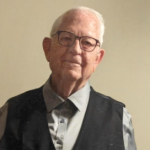
Louis Jolyon West was a prominent psychiatrist who studied hypnosis, coercive persuasion, dissociation, drug effects and violent behavior. He later became chair of psychiatry at the University of Oklahoma and then at UCLA.
Documented CIA connection
Recently examined correspondence provides strong evidence that West had a deeper relationship with MKULTRA than he publicly acknowledged during the 1970s.
While serving as chief psychiatrist at Lackland Air Force Base in San Antonio, West wrote to Sidney Gottlieb in June 1953. According to correspondence discussed in the 2026 congressional hearing, West proposed research involving:
- Hypnosis combined with psychoactive drugs.
- Producing confusion and amnesia.
- Inducing temporary psychological disturbances.
- Extracting information from unwilling subjects.
- Placing false information into a subject’s mind.
- Altering the attitudes of previously loyal
individuals. - Experiments involving military personnel,
prisoners and psychiatric patients. - Eventually applying the research in practical
field situations.
Gottlieb reportedly responded that West had accurately understood what the CIA was seeking. West subsequently received funding associated with MKULTRA Subproject 43, commonly described as research into hypnosis, suggestibility and dissociative states.
A 1956 report attributed to West discussed using hypnotic suggestion to replace a subject’s recollection of an actual event with a fictional version. These claims are described in testimony beginning on page 9 of the 2026 House MKULTRA hearing record.
What is not established
There is presently no solid evidence that West:
- Conducted the February 10, 1954 pistol
experiment. - Performed his MKULTRA work at Fort Detrick.
- Successfully created an assassin.
- Programmed Jack Ruby to shoot Lee Harvey Oswald.
- Programmed Charles Manson or his followers.
- Participated in an operational assassination.
West examined Jack Ruby in 1964 and concluded that Ruby was psychotic. That contact has understandably generated suspicion because of West’s concealed CIA relationship. Suspicion, however, is not proof that West caused Ruby’s condition or controlled his actions.
West also operated a research project in San Francisco during the period when Charles Manson and his followers lived in the area. Investigative journalist Tom O’Neill has documented intriguing overlaps among West’s research, a Haight-Ashbury clinic and people associated with Manson. No surviving document proves that West treated, hypnotized or programmed Manson. Even commentary sympathetic to that theory acknowledges that the proposed MKULTRA–Manson connection remains unproven.
7. Could hypnosis really make somebody murder?
Modern evidence does not support the movie-style idea that an unwilling person can be turned into an automatic killer through a short hypnotic command.
Hypnosis can affect:
- Attention and perception
- Pain
- Imagination
- Memory confidence
- Suggestibility
- A person’s subjective sense that an action
happened automatically
It can also contribute to distorted or false memories. The National Institute of Justice notes that people differ greatly in hypnotic responsiveness and that hypnotized people remain capable of deception. Its overview is available through the National Institute of Justice.
A central problem with demonstrations involving apparent danger is that subjects may infer that safety precautions have been taken. A person pointing a laboratory pistol may suspect that it is unloaded even when told otherwise. Social pressure, trust in the experimenter, role-playing and a desire to cooperate can produce dangerous-looking behavior without proving total control.
Real coercive control can nevertheless contribute to violence when it involves a much larger system:
- Prolonged isolation
- Threats and intimidation
- Ideological indoctrination
- Dependency on a leader
- Sleep deprivation
- Drugs
- Group pressure
- Deception about the intended victim
- Gradual escalation of harmful conduct
- Selection of a person already willing or
vulnerable
That is better understood as coercion, manipulation and conditioning—not a magical hypnotic override of a healthy person’s will.
Final assessment
The Dallas Times Herald story was not invented. It accurately reflected a disturbing CIA document showing that agency personnel tested whether a hypnotized subject would fire an unloaded weapon and later report no memory of doing so.
The larger historical record establishes that the CIA and cooperating military researchers seriously pursued drugs, hypnosis, amnesia, dissociation and behavioral manipulation. Fort Detrick was part of that world, especially through its Special Operations Division and Frank Olson’s cooperation with Sidney Gottlieb.
Dr. Jolly West was a genuine CIA-associated MKULTRA researcher whose proposals included drugs, hypnosis, amnesia and manipulation of beliefs and memories. But the available evidence does not show that West worked at Fort Detrick, conducted the pistol experiment, or successfully programmed a person to commit an actual murder. Claims connecting him directly to Jack Ruby, Charles Manson or a completed assassination should therefore be presented as allegations or investigative theories—not established historical facts.