-
49. Symbolism in Logos: A Detailed Visual Report
COMMENTS FROM STREET TALK NETWORK ABOUT THIS POST-
1. Do your own research on the information provided and then come up with your own conclusions.
2. This article contains many names and other information that can be researched.
3. Trust your gut feeling on information provided as this post may contain slanted information.
A logo is a compressed message. Its shapes, colors, animals, plants, numbers, and mythological figures can communicate identity, authority, values, history, or emotion before a person reads a single word.
The central rule of interpreting logos is:
A symbol does not have one universal meaning. Its meaning depends on the culture, historical period, organization, surrounding imagery, and the designer’s documented intent.
A pyramid, for example, may represent stability and endurance; an eye may mean observation or divine providence; together they may refer specifically to the Great Seal of the United States. The same eye by itself should not automatically be interpreted as Masonic, occult, or conspiratorial.
6
1. Geometric symbols
The circle
The circle has no obvious beginning or ending, so it frequently represents eternity, completeness and recurring cycles. Organizations also place names around a circular seal because the form resembles an official stamp, coin or medallion.
However, circles can have practical meanings too:
- A circle around an
image may represent protection. - Several linked
circles can signify cooperation. - Concentric circles
suggest a target, focus or expanding influence. - A broken circle
may suggest openness, movement or technological progress.
The triangle and pyramid
A triangle rests securely on a broad base, making it a natural symbol of strength and hierarchy. A triangle can also represent a group of three: body–mind–spirit, past–present–future or three divisions of an organization.
A pyramid adds the ideas of monumentality, endurance and ascent. In hierarchical diagrams, the wide base represents the many and the apex represents leadership or the highest goal. It does not, by itself, prove an occult affiliation.
2. The eye, pyramid and “all-seeing eye”
The Eye of Providence
The radiant eye inside a triangle is commonly called the Eye of Providence. In Christian art, the eye represented God watching humanity; the triangle could represent the Trinity. Freemasonry later employed eye imagery as a reminder that a person’s actions are observed by God, but Freemasonry did not originate every form of the symbol.
The eye and unfinished pyramid on the Great Seal
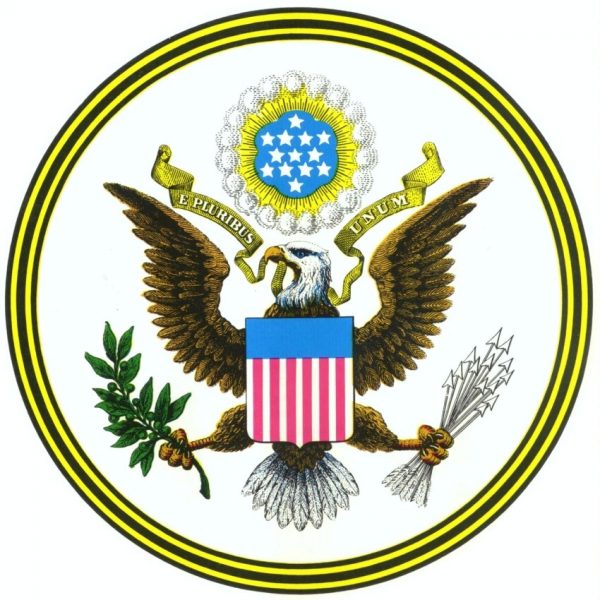
On the reverse of the Great Seal of the United States:
- The unfinished
pyramid represents strength and duration. - Its 13 levels
refer to the original states. - The eye and rays
represent providence. - Annuit Cœptis means
approximately “He [Providence] has favored our undertakings.” - Novus Ordo
Seclorum
means “a new order of the ages,” referring to the beginning of the
American political era—not, in its documented historical context, a plan
for a secret world government.
The front of the Great Seal uses 13 stars, 13 arrows and 13 leaves or related groupings to recall the original states. The eagle looks toward the olive branch, signifying a preference for peace while retaining the power of defense. This symbolism is explained by the U.S. National Museum of American Diplomacy.
3. Sun, moon, stars and the sky
The five-pointed star
The five-pointed star is among the most context-dependent symbols. It can signify:
- A U.S. state
- Military rank or
service - Quality or
celebrity - Navigation
- The five wounds of
Christ - The five classical
elements - A pentagram in
magical or religious traditions
Its orientation, surrounding words and institutional history determine the meaning.
The six-pointed star
The hexagram became the best-known symbol of Jewish communal identity as the Star of David. But the geometric form existed in other religious, decorative and alchemical traditions. Its presence in an older building or logo does not necessarily demonstrate a Jewish, occult or political connection.
4. Animals and mythical creatures
5
Eagle symbolism
The eagle’s power comes from its height, eyesight and status as an apex bird. Ancient Rome used the eagle as a military and imperial standard. Numerous later governments—including the United States, Germany, Mexico and Poland—used different eagle forms to express sovereignty.
An eagle does not have a single political meaning. Its interpretation depends on:
- Species and pose
- Whether it has one
or two heads - Objects in its
talons - Direction of its
gaze - Crown, shield or
other accompanying elements - The nation or
institution using it
A double-headed eagle often represents authority looking in two directions or ruling over two geographic or institutional domains. It has appeared in Byzantine, Holy Roman, Russian, Serbian and fraternal contexts.
Lion symbolism
Lions were associated with royalty because of their physical power and commanding appearance. Heraldry distinguishes between poses: a standing lion, walking lion, crowned lion, winged lion and multiple lions can carry different historical associations.
Modern banks, sports teams and automobile companies use lions to suggest courage, prestige, durability and leadership.
Owl symbolism
The owl became closely associated with wisdom through Athena, the Greek goddess of wisdom, whose emblem was the little owl. Universities, publishers, libraries and educational organizations consequently use owl logos.
But the owl can also mean:
- Ability to see
what others cannot - Night, secrecy or
mystery - Watchfulness
- Death or
misfortune in certain cultural traditions
The use of an owl does not by itself establish a connection to a secret society.
Serpent symbolism
A serpent shedding its skin naturally suggests renewal. Because snake venom can kill but also contribute to medicine, serpents acquired an association with both death and healing.
Two medical symbols are frequently confused:
- Rod of Asclepius: one snake around
a staff. This is the traditional symbol of medicine and healing. - Caduceus: two snakes around
a winged staff. This belonged to Hermes or Mercury and traditionally
represented messengers, commerce and negotiation.
The caduceus became widely used as a medical emblem in the United States, partly through institutional adoption, although historically the Rod of Asclepius is the more precise medical symbol.
Phoenix symbolism
The phoenix dies or is consumed by fire and then returns to life. Municipalities recovering from war or disaster, rehabilitation organizations and reorganized companies frequently use it to represent survival and renewal.
Starbucks’ siren
Starbucks uses a crowned, twin-tailed siren or mermaid. The company’s maritime imagery relates to Seattle’s history as a port and to coffee’s transportation across the sea. The figure was derived from an old woodcut and progressively simplified.
The siren suggests attraction, mystery and the sea. Claims that the logo secretly proves demonic worship go beyond the available historical evidence. Starbucks publicly identifies the figure as a twin-tailed siren; the emblem’s evolution is documented through successive corporate designs. Background on the Starbucks redesign.
5. Plants, trees and natural objects
Tree of Life
Tree imagery appears in Jewish, Christian, Islamic, Mesopotamian, Norse, Celtic and other traditions. Roots represent origins; the trunk represents present existence; branches represent growth, descendants or the heavens.
Because the theme is nearly universal, a tree enclosed in a circle should not automatically be assigned to one religion or secret tradition.
Laurel wreath
In Greece and Rome, laurel crowns were awarded to victors and distinguished figures. Today they appear around school seals, military emblems, film-festival logos and awards. They normally convey honor or achievement rather than political domination.
Lotus
A lotus rises from muddy water while producing a clean blossom. It consequently represents purity, enlightenment, spiritual development and overcoming difficult circumstances, particularly in Hindu and Buddhist traditions.
6. Religious and spiritual symbols
Religious symbols should be interpreted according to the community using them. Borrowing sacred imagery for commercial branding can also create misunderstanding or offense.
7. Fraternal, initiatory and esoteric symbols
4
Square and compasses
According to the Masons of California’s explanation:
- The square
represents morality and “squaring” one’s actions. - The compasses
concern proper boundaries and the individual’s relationship to society. - The letter G
commonly refers to geometry and, depending on the jurisdiction, God. - The level
symbolizes equality. - The plumb
symbolizes justice and upright conduct.
These meanings are explained by a Masonic organization itself at Freemasonry Symbols.
A company that uses an ordinary compass, drafting tool or chevron is not necessarily Masonic. Identification requires the recognizable combined emblem or supporting evidence.
Ouroboros
The serpent eating its own tail creates a closed circle. It has represented:
- Eternity
- Cyclical time
- Matter consuming
and renewing itself - Death and rebirth
- Unity of opposites
- A self-contained
system
Modern recycling, software, gaming and environmental logos sometimes employ ouroboros-like circles without adopting the full esoteric tradition.
Skull and crossbones
This symbol has several very different uses:
- Warning of poison
or deadly danger - Pirate identity in
popular culture - Military defiance
- Memento mori—a reminder that
every person dies - Cemetery and
funerary symbolism - Initiatory
reflection on mortality
Context is indispensable.
8. Political, legal and institutional symbols
Fasces
The fasces consists of rods bound together, often surrounding an axe. In ancient Rome it represented the authority of magistrates and the principle that united rods are stronger than individual rods.
It appears in historic American and European government architecture. Benito Mussolini’s movement adopted the fasces and gave “Fascism” its name, but an older architectural fasces should not automatically be treated as evidence of twentieth-century fascist allegiance. Date and context matter.
Crown
A crown may represent literal monarchy, but commercial logos use it more broadly for:
- Premium quality
- “Best in class”
status - Heritage
- Authority
- Achievement
- A brand name
containing “king,” “royal” or “crown”
9. Color symbolism in logos
Color meanings are neither universal nor scientifically fixed. White is associated with weddings in many Western settings but mourning in some Asian traditions. Red may mean danger in one context and celebration, prosperity or good fortune in another.
10. Numbers used symbolically
A number appearing in a logo may simply be a founding year, address, product model or sports reference. A symbolic interpretation needs historical evidence.
11. Famous corporate logos and their documented meanings
5
The BMW propeller myth
The BMW emblem’s blue and white sections refer primarily to Bavaria. A 1929 advertisement placed the roundel over a rotating aircraft propeller, helping create the enduring claim that the emblem was originally designed as a propeller. The emblem predates that advertisement by approximately 12 years.
This is a useful lesson: a popular logo explanation can become more famous than the documented origin.
12. Controversial and appropriated symbols
The swastika
The swastika existed thousands of years before Nazism and represented well-being, good fortune, solar movement or sacred order in several cultures. It remains a sacred symbol in Hinduism, Buddhism and Jainism.
Hitler and the Nazi Party appropriated a rotated black swastika in a white circle on a red field. Because of the Holocaust and Nazi crimes, the Nazi version is now predominantly recognized in the West as a symbol of antisemitism, racial hatred and genocide.
The United States Holocaust Memorial Museum emphasizes both facts: its long pre-Nazi history and its transformation into the principal emblem of Nazism. Orientation alone is not always sufficient; cultural setting and presentation matter.
Runes and ancient European imagery
Individual runes originated as letters in Germanic writing systems. Some were later appropriated by Nazi and neo-Nazi organizations. A rune may therefore be:
- An authentic
historical letter - A Scandinavian
cultural reference - A modern brand
initial - A military emblem
- A
white-supremacist symbol in a specific setting
Responsible interpretation requires looking at accompanying numbers, slogans, colors and organizational history.
13. How to distinguish evidence from speculation
When evaluating claims about a logo, use this hierarchy:
1. The designer’s original explanation
2. The organization’s brand manual or official history
3. Early sketches, correspondence and trademark records
4. Contemporary reporting from the time of adoption
5. Historical research about the symbol
6. Later interpretations by branding scholars
7. Internet claims based only on visual resemblance
A convincing interpretation should answer:
- When was the logo
created? - Who designed it?
- What instructions
did the designer receive? - Did the
organization explain the imagery? - Was the alleged
symbolism common at that time? - Does the complete
design support the interpretation? - Has the logo
changed? - Is the supposed
“hidden image” intentional, or merely a coincidental resemblance?
14. Common mistakes when analyzing logos
Mistake 1: Treating resemblance as proof
Two designs can look alike without sharing an origin. Circles, triangles, wings, eyes and stars are basic visual forms used independently throughout history.
Mistake 2: Assigning only the darkest possible meaning
A serpent can mean evil, but it can also mean medicine and renewal. A skull can mean death, danger, remembrance or military defiance.
Mistake 3: Ignoring chronology
A symbol cannot have been borrowed from an organization that adopted it later. Dates often settle claims that otherwise appear mysterious.
Mistake 4: Assuming that shared symbolism proves a relationship
A bank, government and fraternal lodge may all use columns to communicate stability. That does not demonstrate an institutional connection.
Mistake 5: Ignoring practical design considerations
Some apparent symbolism exists because the design must:
- Remain
recognizable at small size - Work in one color
- Fit a circular
badge - Reproduce on
uniforms or vehicles - Translate across
languages - Resemble the
company’s name or product
Conclusion
Symbols in logos operate on several levels:
- Literal: A shell for Shell
or a target for Target. - Emotional: Blue for trust or
red for energy. - Historical: An eagle, crown,
heraldic shield or regional colors. - Religious: A cross, lotus,
menorah or dharma wheel. - Mythological: A phoenix, siren,
griffin or dragon. - Fraternal: Square and
compasses, plumb or level. - Conceptual: An infinity sign,
spiral, globe or interlocking rings. - Hidden through
negative space:
The FedEx arrow. - Coincidental or
speculative:
Images perceived by viewers without documentation of intent.
The most reliable interpretation combines the symbol’s historical background with evidence about the specific designer and organization. A symbol can have several legitimate meanings, but visual similarity alone is not proof of a hidden affiliation or secret message.
Top of Form
Bottom of Form

diplomacy.state.gov
The Great Seal - The National Museum of American Diplomacy
The Great Seal of the United States is a unique symbol of our country and national identity. Only one authorized Great Seal is in official use and is
- A circle around an