-
56. Freemasonry has included many prominent Americans and world figures. Most na
COMMENTS FROM STREET TALK NETWORK ABOUT THIS POST-
1. Do your own research on the information provided and then come up with your own conclusions.
2. This article contains many names and other information that can be researched.
3. Trust your gut feeling on information provided as this post may contain slanted information.
Also, being a Mason does not mean that a person’s political, religious, or professional actions were directed by Freemasonry.
U.S. presidents
Fourteen U.S. presidents are generally recognized as Master Masons:
Lyndon B. Johnson is a special case. He received the Entered Apprentice degree in Texas in 1937 but apparently did not proceed through the remaining degrees. He therefore should not be described as a Master Mason.
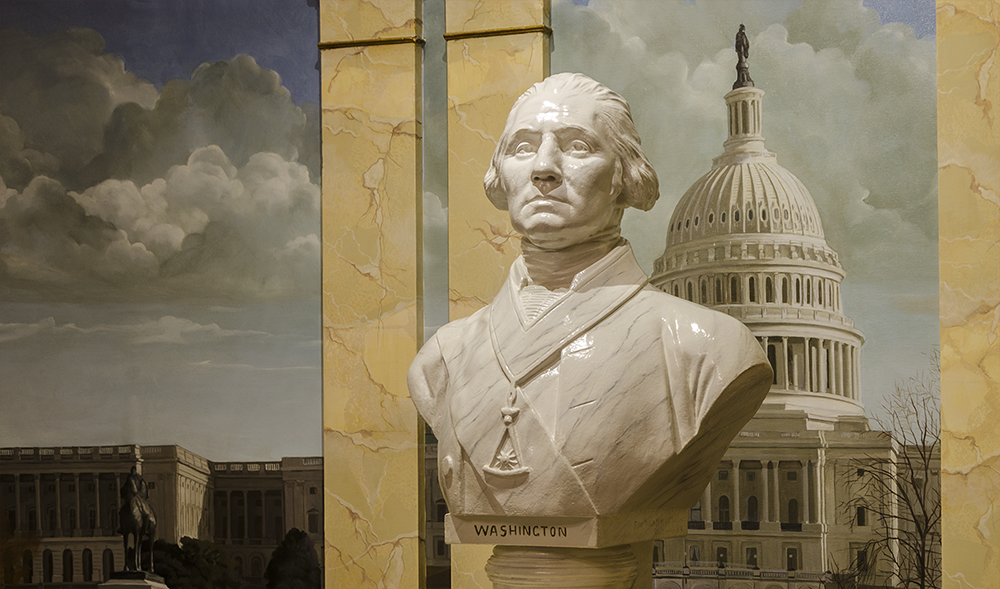
George Washington’s membership is especially well documented. He participated in Masonic observances, supported military lodges and presided over the Masonic cornerstone ceremony for the U.S. Capitol in 1793. The George Washington Masonic National Memorial preserves extensive documentation about his Masonic life.
Abraham Lincoln, Thomas Jefferson, John F. Kennedy, Ronald Reagan, George H. W. Bush, George W. Bush, Bill Clinton, Barack Obama, Donald Trump and Joe Biden have not been reliably documented as Freemasons. Reagan received honorary recognition from the Scottish Rite, but that did not make him a lodge Mason.
Founders, lawmakers and government leaders
- Benjamin Franklin
— Pennsylvania printer, diplomat and statesman; Grand Master of
Pennsylvania. - John Hancock —
president of the Continental Congress and governor of Massachusetts. - Paul Revere —
revolutionary leader; Grand Master of Massachusetts. - Joseph Warren —
physician and Revolutionary War general; Grand Master of Masons in
Massachusetts. - Robert R.
Livingston — chancellor of New York; administered Washington’s first
presidential oath; Grand Master of New York. - John Marshall —
fourth chief justice of the United States; Grand Master of Virginia. - William Paterson —
senator, governor, Supreme Court justice and signer of the Constitution. - John C.
Breckinridge — vice president, senator and Confederate general. - Sam Rayburn —
longtime speaker of the U.S. House of Representatives. - Hubert H. Humphrey
— vice president and U.S. senator. - Everett Dirksen —
influential Republican Senate leader. - Strom Thurmond —
South Carolina governor and longtime U.S. senator. - John Glenn —
astronaut, Marine officer and U.S. senator. - John Lewis —
civil-rights leader and congressman; member of Prince Hall Freemasonry. - Thurgood Marshall
— civil-rights lawyer and first Black Supreme Court justice; Prince Hall
Mason. - J. Edgar Hoover —
longtime FBI director and prominent Scottish Rite Mason. - Earl Warren —
California governor and chief justice of the United States. - Douglas MacArthur
— general and later a major public figure in postwar Japan. - Fiorello La
Guardia — congressman and mayor of New York City.
Benjamin Franklin, Washington, Prince Hall, Truman, Glenn and Lewis are among those featured by the Scottish Rite’s Masonic Hall of Fame.
Military leaders and explorers
- George Washington
— commander in chief of the Continental Army. - Marquis de
Lafayette — French officer and major supporter of the American Revolution. - Nathanael Greene —
Revolutionary War major general. - Israel Putnam —
Revolutionary War general. - Winfield Scott —
commanding general of the U.S. Army. - George B.
McClellan — Union general during the Civil War. - George E. Pickett
— Confederate general. - John J. Pershing —
commander of the American Expeditionary Forces in World War I. - Douglas MacArthur
— five-star general and Medal of Honor recipient. - Omar Bradley —
five-star general and first chairman of the Joint Chiefs of Staff. - Henry “Hap” Arnold
— general of the Army and Air Force pioneer. - Jimmy Doolittle —
aviator and leader of the 1942 Doolittle Raid. - John A. Lejeune —
Marine Corps commandant, for whom Camp Lejeune was named. - Chesty Puller —
highly decorated Marine. - William “Billy”
Mitchell — early advocate of American air power. - Richard E. Byrd —
naval officer and polar explorer. - Meriwether Lewis
and William Clark — leaders of the Lewis and Clark Expedition. - Buzz Aldrin —
Apollo 11 astronaut; carried a special Masonic deputation to the Moon. - Virgil “Gus”
Grissom — Mercury, Gemini and Apollo astronaut. - Gordon Cooper —
Mercury and Gemini astronaut.
The Scottish Rite provides a useful introduction to several documented Masonic military leaders.
Religious leaders and founders
Freemasonry is not itself a religion. Regular American lodges normally require belief in a Supreme Being but do not prescribe a particular denomination. Members have included Christians, Jews, Muslims and members of other faiths.
- Prince Hall —
Methodist preacher and founder of African American Prince Hall
Freemasonry. - Rev. Dr. Norman
Vincent Peale — minister and author of The Power of Positive Thinking. - Rev. George W.
Truett — influential Baptist minister in Texas. - Rev. Joseph Fort
Newton — Baptist and later Episcopal minister; author of The Builders,
a famous Masonic work. - Rev. James
Anderson — Presbyterian minister associated with the 1723 Constitutions
of the Free-Masons. - Joseph Smith —
founder of the Latter Day Saint movement; became a Mason in Nauvoo,
Illinois, in 1842. - Hyrum Smith —
Joseph Smith’s brother and senior Latter Day Saint leader. - Brigham Young —
early Latter Day Saint leader and Utah territorial governor; joined
Masonry before the Mormon migration west. - Rabbi Isaac Mayer
Wise — major leader in the development of Reform Judaism in the United
States. - Bishop James A.
Walsh — founder of the Maryknoll missionary movement, frequently
identified in Masonic historical records. - William R. White —
Baptist minister, educator and president of Baylor University.
There have also been serious disagreements between some churches and Freemasonry. The Roman Catholic Church, for example, prohibits Catholics from joining Masonic organizations. Therefore, claims that popes, cardinals or prominent Catholic saints secretly belonged should be treated very cautiously.
Actors, entertainers and filmmakers
- John Wayne —
actor; member of Marion McDaniel Lodge No. 56 in Tucson, Arizona. - Clark Gable —
actor and World War II airman. - Ernest Borgnine —
actor and longtime Mason. - Red Skelton —
comedian and actor; 33° Scottish Rite Mason. - Roy Rogers — actor
and singer. - Gene Autry —
singing cowboy, actor and businessman. - Audie Murphy —
actor and America’s most decorated World War II combat soldier. - James Stewart —
actor and World War II bomber pilot. - Harold Lloyd —
silent-film comedian and major Masonic philanthropist. - Douglas Fairbanks
— silent-film star and founding president of the Academy of Motion Picture
Arts and Sciences. - Oliver Hardy —
half of the comedy team Laurel and Hardy. - W. C. Fields —
comedian and actor. - Peter Sellers —
British actor and comedian. - Richard Pryor —
comedian and actor. - Don Rickles —
comedian and actor. - Burl Ives — singer
and actor. - Danny Thomas —
entertainer and founder of St. Jude Children’s Research Hospital. - Cecil B. DeMille —
director of The Ten Commandments and a founder of the
motion-picture academy. - D. W. Griffith —
pioneering filmmaker. - Irving Berlin —
composer of “God Bless America” and “White Christmas.” - Duke Ellington —
composer and jazz orchestra leader. - Count Basie — jazz
musician and bandleader. - Lionel Hampton —
jazz musician. - Nat King Cole —
singer and pianist; Prince Hall Mason. - Louis Armstrong —
frequently documented as a member of Montgomery Lodge No. 18, a Prince
Hall lodge in New York. - Harry Houdini —
magician and escape artist. - Will Rogers —
humorist, actor and social commentator. - Mel Blanc — voice
actor known as “The Man of a Thousand Voices.”
The Scottish Rite has individual biographical studies of Clark Gable, Cecil B. DeMille and Red Skelton.
Writers, scientists, inventors and business figures
- Mark Twain —
author; member of Polar Star Lodge No. 79 in St. Louis. - Robert Burns —
Scottish poet whose Masonic associations appear throughout his life and
writing. - Sir Arthur Conan
Doyle — creator of Sherlock Holmes. - Rudyard Kipling —
author of The Jungle Book and The Man Who Would Be King. - Oscar Wilde —
Irish playwright and author. - Jonathan Swift —
author of Gulliver’s Travels, although some details about his
membership remain debated. - Voltaire — French
philosopher; initiated shortly before his death. - Johann Wolfgang
von Goethe — German writer and statesman. - Alexander Pope —
English poet. - Edward Gibbon —
historian of the Roman Empire. - James Boswell —
Scottish writer and biographer. - Wolfgang Amadeus
Mozart — composer whose opera The Magic Flute contains Masonic
themes. - Joseph Haydn —
composer. - John Philip Sousa
— composer and bandleader. - Alexander Fleming
— discoverer of penicillin. - Edward Jenner —
pioneer of the smallpox vaccine. - Joseph Lister —
pioneer of antiseptic surgery. - Benjamin Franklin
— scientist, inventor and publisher as well as statesman. - Samuel Colt —
firearms inventor and industrialist. - King C. Gillette —
businessman associated with the safety razor. - Walter Chrysler —
automobile executive. - Ransom E. Olds —
automobile pioneer. - James Naismith —
inventor of basketball. - Walter Fleming —
physician and co-founder of the Shriners. - William Wrigley
Jr. — chewing-gum manufacturer and businessman.
International political leaders
- Winston Churchill
— British prime minister; initiated in Studholme Lodge No. 1591 in 1901. - Edward VII —
British king and former Grand Master of the United Grand Lodge of England. - George VI —
British king and active Freemason. - Mustafa Kemal
Atatürk — founder and first president of modern Turkey, although the exact
lodge documentation is sometimes disputed. - Simón Bolívar —
South American independence leader. - José de San Martín
— leader in the independence movements of Argentina, Chile and Peru;
details of his exact affiliations remain debated. - Giuseppe Garibaldi
— Italian unification leader and important figure in continental
Freemasonry. - José Rizal —
Filipino reformer, physician and national hero. - Lázaro Cárdenas —
president of Mexico. - Miguel Alemán
Valdés — president of Mexico. - Porfirio Díaz —
president of Mexico and prominent Mexican Mason. - Bernardo O’Higgins
— Chilean independence leader, although whether his lodge should be
considered regular Freemasonry is contested. - Haile Selassie —
emperor of Ethiopia, commonly documented as a Freemason. - Sir Robert Borden
— Canadian prime minister. - John A. Macdonald
— first Canadian prime minister. - William Lyon
Mackenzie King — Canadian prime minister.
Civil-rights and Prince Hall leaders
Prince Hall Freemasonry developed because Black men were excluded from many predominantly white lodges. It became an important network of mutual assistance, education and civic leadership.
- Prince Hall —
founder and namesake. - Thurgood Marshall
— Supreme Court justice. - John Lewis —
congressman and civil-rights leader. - W. E. B. Du Bois —
scholar and civil-rights leader. - Booker T.
Washington — educator and leader of Tuskegee Institute. - Medgar Evers —
civil-rights activist. - A. Philip Randolph
— labor and civil-rights leader. - Benjamin Mays —
minister, educator and mentor to Martin Luther King Jr. - Oscar De Priest —
first Black congressman elected in the 20th century. - Charles H. Wesley
— historian, educator and leading historian of Prince Hall Masonry. - Sugar Ray Robinson
— boxing champion. - Joe Louis —
heavyweight boxing champion. - Duke Ellington,
Count Basie, Lionel Hampton, Nat King Cole and Louis Armstrong — major
entertainers associated with Prince Hall lodges.
Martin Luther King Jr. is sometimes placed on Internet lists of Masons, but reliable evidence that he completed Masonic initiation is lacking. His father, Martin Luther King Sr., has stronger documented Masonic associations.
Sports figures
- James Naismith —
invented basketball. - Arnold Palmer —
professional golfer. - Jack Dempsey —
heavyweight boxing champion. - Sugar Ray Robinson
— boxing champion. - Joe Louis —
heavyweight champion and Prince Hall Mason. - Jersey Joe Walcott
— heavyweight champion. - John Elway —
professional football quarterback. - Scottie Pippen —
professional basketball player. - Ty Cobb — baseball
player. - Rogers Hornsby —
baseball player. - Branch Rickey —
baseball executive who signed Jackie Robinson. - Cy Young —
baseball pitcher. - Bob Dole —
although best known as a senator and presidential candidate, he was also a
documented Kansas Mason and should be included among prominent public
figures.
Important cautions before joining
A lodge invitation is an opportunity to investigate, not an obligation. Ask the local chapter—usually called a lodge—about:
- Its Grand Lodge
affiliation and whether it is recognized by the established Grand Lodge in
your state. - Initiation fees,
annual dues and additional expenses. - Expected meeting
attendance and charitable work. - Time commitments
for learning degree material. - Rules concerning
religion, politics and lodge discussions. - Whether you may
meet members socially before submitting a petition. - Whether the lodge
recognizes or maintains relations with Prince Hall Masonry. - How resignation or
demitting works if you later decide it is not for you.
Freemasonry is decentralized: there is no single worldwide leader governing every lodge. Standards, recognition and practices vary among Grand Lodges. A careful historical list compiled from primary references is available through the Grand Lodge of British Columbia and Yukon, which also warns that famous-Mason lists sometimes repeat weak or unsupported claims. That caution is worth remembering when researching any particular person.
You forgot to add a list of Freemasons that served with distinction on the Warren Commission. Please to do.
You are correct. Freemasons played a notable role on the President’s Commission on the Assassination of President Kennedy—the Warren Commission—established by President Lyndon B. Johnson on November 29, 1963.
Freemasons on the Warren Commission
Of the seven commissioners, three can be identified confidently as documented Freemasons:
Earl Warren
Earl Warren was the Commission’s chairman and its most senior documented Freemason. His Masonic career was substantial:
- He joined Sequoia
Lodge No. 349 in Oakland, California. - He served as the
lodge’s Worshipful Master. - He became Grand
Master of Masons in California in 1935. - He remained
publicly associated with California Masonry while serving as district
attorney, attorney general, governor and chief justice. - California Masonic
archival holdings include Warren’s lodge book and lodge bulletins
identifying him as Worshipful Master.
President Johnson initially encountered resistance from Warren, who did not want the assignment. Johnson nevertheless persuaded him that the investigation was necessary to reassure the country and prevent international tensions following Kennedy’s assassination.
As chairman, Warren supervised the Commission, participated in important witness examinations and joined Ford in questioning Jack Ruby in Dallas on June 7, 1964. His signature appeared first on the Commission’s September 24, 1964, transmittal letter to President Johnson.
The Grand Lodge of California identifies Warren as one of its former Grand Masters and prominent members. See the Grand Lodge of California history presented by the George Washington Masonic National Memorial.
Richard B. Russell Jr.
Senator Richard Brevard Russell Jr. of Georgia is reported in Masonic biographical sources as a member of Winder Lodge No. 33, located in Winder, Georgia. He was one of the country’s most powerful senators and chaired the Senate Armed Services Committee.
Russell’s role is particularly important because he was not completely satisfied with the wording of the final report. He questioned whether Lee Harvey Oswald and Jack Ruby could be ruled entirely unconnected to a broader conspiracy. A recorded telephone conversation between Russell and President Johnson shows that Russell had reservations about the strength of some of the Commission’s conclusions.
Nevertheless, Russell signed the report. His participation therefore should not be interpreted as complete personal agreement with every sentence. His record shows that individual Masons on the Commission were capable of disagreeing with one another and with the final wording.
A frequent source of confusion is Senator Russell’s father, Richard B. Russell Sr., who was also a prominent Georgia jurist and a Freemason. Historical searches must distinguish the senator from his father. The reported lodge affiliation for the commissioner is Winder Lodge No. 33.
Gerald R. Ford
Gerald Ford was already a Mason when Johnson appointed him to the Commission:
- Entered Apprentice
degree: September 30, 1949, Malta Lodge No. 465, Grand Rapids, Michigan. - Fellow Craft and
Master Mason degrees: May 18, 1951, Columbia Lodge No. 3, Washington, D.C. - Scottish Rite
degrees: 1957. - Coroneted a 33°
Scottish Rite Mason: 1962.
Ford’s Commission responsibilities included studying Oswald’s life and political activities. He and Earl Warren traveled to Dallas and questioned Jack Ruby. Ford later coauthored Portrait of the Assassin, published in 1965, which defended the conclusion that Oswald killed Kennedy.
Records released years later showed that Ford communicated privately with senior FBI official Cartha “Deke” DeLoach about internal Commission discussions. Ford’s defenders describe this as keeping investigators informed; critics argue that it compromised the Commission’s independence. This controversy should be acknowledged separately from Ford’s Masonic membership—no released evidence establishes that his FBI communications were undertaken on behalf of Freemasonry.
Ford continued defending the Commission and its central conclusions until his death in 2006. His membership is documented in the Grand Lodge of British Columbia and Yukon’s referenced list.
What about the other four commissioners?
The remaining members were:
- Senator John
Sherman Cooper of Kentucky - Representative
Hale Boggs of Louisiana - Allen W. Dulles,
former CIA director - John J. McCloy,
lawyer, diplomat and former World Bank president
Some Internet lists claim that one or more of these men were Masons. However, I have not found equally strong lodge-level documentation establishing them as regular Freemasons.
John Sherman Cooper is listed as a Mason in some political biographical directories, but searchable authoritative Masonic records do not presently provide a clear lodge name, initiation date or degree history. He was unquestionably a member of Yale’s Skull and Bones, but Skull and Bones is not Freemasonry.
Hale Boggs was a documented member of the Benevolent and Protective Order of Elks. The Elks use terms and ceremonies that can appear Masonic, but the Elks are a separate organization.
Allen Dulles belonged to elite clubs and intelligence networks, and his family had long-standing diplomatic and Presbyterian connections. Claims that he was a Freemason are widespread but usually appear without a lodge record.
John J. McCloy belonged to prominent legal, financial and foreign-policy organizations. He was closely associated with numerous establishment figures, but association with Masons is not proof of Masonic initiation.
Corrected conclusion
The historically responsible statement is:
At least three of the seven Warren commissioners—Chairman Earl Warren, Senator Richard Russell Jr. and Representative Gerald Ford—were documented or credibly identified Freemasons.
Earl Warren and Gerald Ford have the strongest readily verifiable records. Russell’s membership is reported with a specific Georgia lodge but deserves careful separation from the similarly named Masonic records of his father.
The National Archives’ Warren Commission introduction confirms the seven official commissioners and their positions. The fact that several were Masons is historically noteworthy, but standing alone it does not prove that Freemasonry directed the investigation or determined its conclusions.

gwmemorial.org
Home ‣ Learn ‣ George Washington, The Mason George Washington, The Mason George Washington joined the Masonic Lodge in Fredericksburg, Virginia, at the age of twenty in 1752. During the War for Independence, General Washington attended Masonic celebrations and religious … Continue reading
- Benjamin Franklin