-
68.Los Zetas: U.S.-linked military training, disputed CIA claims, massacres, and
COMMENTS FROM STREET TALK NETWORK ABOUT THIS POST-
1. Do your own research on the information provided and then come up with your own conclusions.
2. This article contains many names and other information that can be researched.
3. Trust your gut feeling on information provided as this post may contain slanted information.
Los Zetas began differently from most Mexican cartels. Its original core was composed largely of deserters from Mexico’s elite military units—particularly the Grupo Aeromóvil de Fuerzas Especiales, or GAFE. Some GAFE personnel had received instruction from U.S. military personnel under security-assistance programs intended to strengthen Mexico’s counterinsurgency and counternarcotics capabilities.
That documented history is sometimes expanded into claims that Los Zetas itself was deliberately trained or created by the U.S. Army or CIA. The evidence does not support that broader conclusion. The United States trained Mexican soldiers who later deserted and joined organized crime; that is materially different from knowingly training Los Zetas as a cartel.
A necessary correction: credible evidence points primarily to Fort Bragg—now Fort Liberty—in North Carolina, not Fort Detrick in Maryland. Fort Detrick is associated principally with military medical and biological-defense research. I found no dependable government record, military roster, court document, or major investigation showing that founding Zetas trained at Fort Detrick.
1. How Los Zetas originated
During the 1990s, Mexico expanded special military units to confront the Zapatista uprising in Chiapas, armed criminal organizations, kidnappers, and increasingly powerful drug cartels.
Among these formations was GAFE, an elite Mexican Army force trained in:
- Small-unit
infantry operations - Reconnaissance
and surveillance - Counterinsurgency
- Urban
combat - Ambushes
and counter-ambushes - Communications
and intelligence collection - Marksmanship
- Explosives
and demolition - Hostage-rescue
techniques - Capturing
high-value targets - Interrogation
and prisoner handling - Counternarcotics
operations
The training came primarily through the Mexican Army, but foreign instructors—including American, Israeli, and reportedly French personnel—participated in portions of Mexico’s special-forces development.
Arturo Guzmán Decena and the first Zetas
Arturo Guzmán Decena, known as “Z-1,” entered the Mexican Army in 1992. He served in elite formations, including GAFE, before deserting in September 1997.
Gulf Cartel leader Osiel Cárdenas Guillén subsequently asked Guzmán Decena to recruit highly trained men who could protect him, eliminate competitors, resist police and military operations, and impose control over trafficking territories.
Guzmán Decena recruited soldiers and former soldiers from several Mexican units. A substantial portion reportedly had GAFE experience, although accounts describing the founders as an entire GAFE unit deserting simultaneously are misleading. The men left at different times and came from more than one military formation.
The early organization included figures commonly identified as:
- Arturo
Guzmán Decena, “Z-1” - Rogelio
González Pizaña, frequently identified as “Z-2” - Heriberto
Lazcano Lazcano, “Z-3” - Hugo
Ponce Salazar, “Z-4” - Luis
Alberto Guerrero Reyes, “Z-5” - Mateo
Díaz López, “Z-6” - Jesús
Enrique Rejón Aguilar, “Z-7” - Óscar
Guerrero Silva, “Z-8” - Galdino
Mellado Cruz, “Z-9” - Flavio
Méndez Santiago, “Z-11” - Raúl
Lucio Hernández Lechuga, “Z-16”
Membership lists and Z-numbers differ among Mexican government records, journalistic accounts, and later confessions. What is firmly established is that former Mexican soldiers provided the nucleus of the organization.
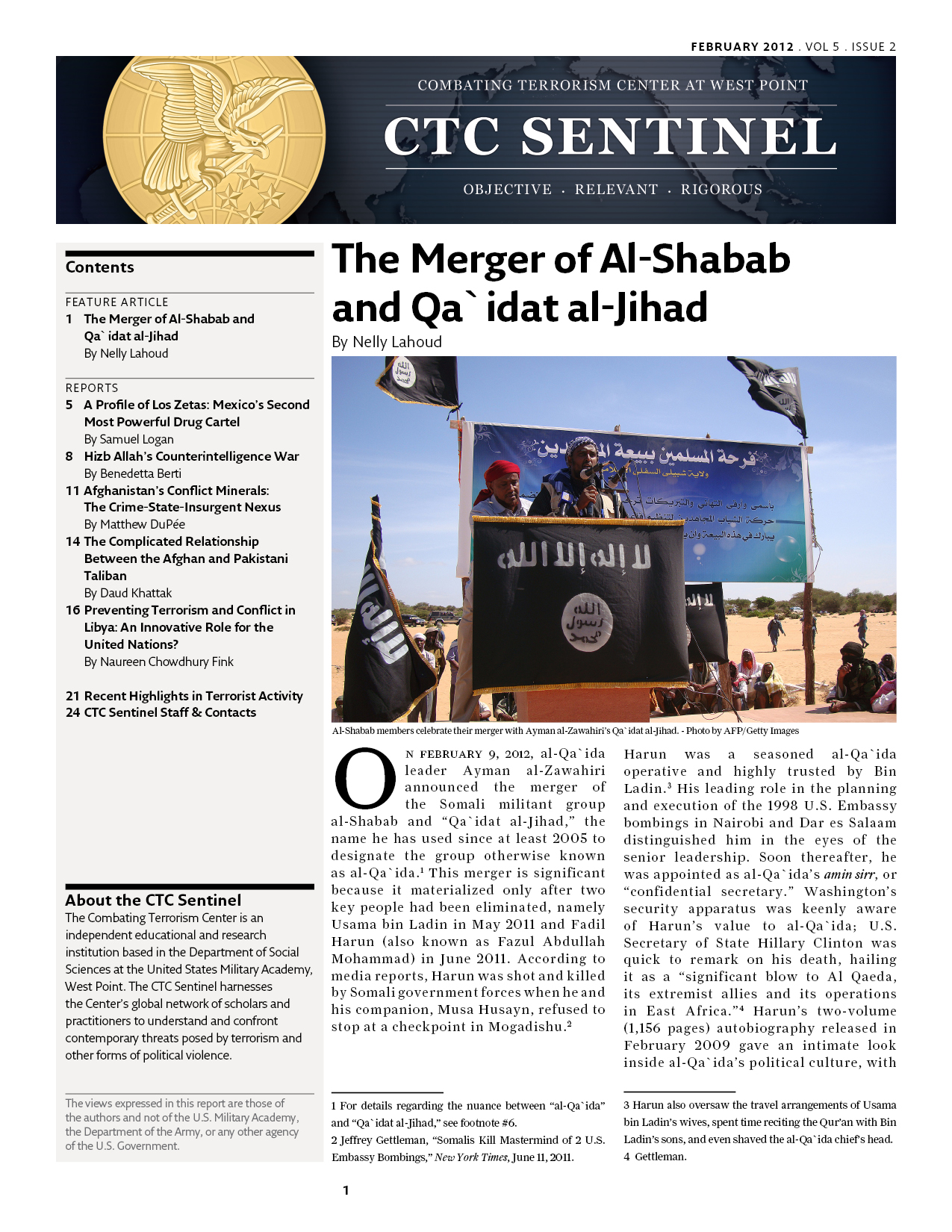
Originally, Los Zetas operated as the Gulf Cartel’s enforcement and protection wing. It eventually developed its own finances, territorial commands, intelligence networks and trafficking operations, and split from the Gulf Cartel around 2010. A useful military-analysis overview is the Combating Terrorism Center’s profile of Los Zetas.
2. Where they were reportedly trained in the United States
Fort Bragg, North Carolina
Fort Bragg
Los Zetas: U.S.-Linked Military Training, Alleged Intelligence Connections, Massacres, and Oil Theft
Executive conclusion
Los Zetas did not begin as an ordinary street gang. Its original nucleus consisted principally of deserters from Mexico’s elite Airborne Special Forces Group—Grupo Aeromóvil de Fuerzas Especiales, or GAFE—who transferred military skills into the service of the Gulf Cartel around 1997–1999.
There is credible evidence that the United States helped train Mexican GAFE personnel during the 1990s. Training was conducted by, or modeled on, U.S. Army Special Forces programs and included counterinsurgency, reconnaissance, small-unit operations, intelligence, communications, weapons, and counternarcotics tactics. Some Mexican personnel traveled to American military facilities, while U.S. instructors also trained Mexican units inside Mexico.
But three distinctions are essential:
1. U.S. forces trained Mexican soldiers, not an organization called Los Zetas. The trainees were serving members of Mexico’s armed forces when trained. Some later deserted and joined organized crime.
2. Fort Bragg—now Fort Liberty and renamed Fort Bragg again in 2025—is repeatedly reported as a training location or institutional center connected to the training. The precise identities and attendance records of every founding Zeta are not publicly available.
3. I found no credible documentary evidence that founding Zetas were trained at Fort Detrick, Maryland. Fort Detrick is primarily associated with military biomedical research, biological defense, and medical intelligence—not the combat training attributed to the Zetas. Claims placing Zeta commando training there appear to confuse Fort Detrick with Fort Bragg.
Likewise, claims of a direct CIA relationship must be treated carefully. The publicly available record supports a relationship between the original men and the Mexican Army, and an indirect training connection to the U.S. Army. It does not establish that the CIA created, commanded, financed, or knowingly trained Los Zetas as a cartel.
Part I: Formation and military background
1. GAFE and Mexico’s counterinsurgency program
The original Zetas came largely from Mexico’s GAFE special-operations formations. These units expanded during the 1990s, particularly following the 1994 Zapatista uprising in Chiapas.
GAFE personnel were prepared for missions such as:
- Counterinsurgency
and rural warfare - Air-mobile
and helicopter-supported operations - Reconnaissance
and surveillance - Tracking
and capturing armed suspects - Close-quarters
and urban combat - Ambushes
and counter-ambushes - Small-unit
tactics - Weapons
and explosives - Secure
radio communications - Intelligence
collection and interrogation - Protection
of important officials and installations - Counternarcotics
missions
An investigation into U.S.-trained Latin American security forces describes a 1997 GAFE exercise in which trainees were divided into opposing teams and prisoners were beaten during simulated interrogation. That does not prove that every GAFE course authorized torture, but it illustrates the aggressive training culture reported within certain units. International Consortium of Investigative Journalists
2. The original Zetas
Arturo Guzmán Decena, known as Z-1, is generally identified as the principal military organizer of Los Zetas. He enlisted in the Mexican Army in 1992, served in an elite formation and deserted in 1997.
Osiel Cárdenas Guillén, then head of the Gulf Cartel, wanted a disciplined armed security force. Guzmán Decena recruited former soldiers—many of them GAFE members—to serve as Cárdenas’s bodyguards, assassins and enforcement organization.
Prominent early members included:
Published estimates of the first group range from approximately 14 core men to 30–40 recruits. This discrepancy results from different definitions: the original leadership circle, all early recruits, or every former soldier who joined during the organization’s formative period.
West Point’s Combating Terrorism Center describes the Zetas’ transformation from a military-derived enforcement group into a large criminal organization employing territorial control, intimidation and spectacular violence. Combating Terrorism Center at West Point
Part II: Where they were reportedly trained in the United States
3. Fort Bragg, North Carolina
Fort Bragg is the most frequently cited American installation in accounts of U.S. training connected to the original Zetas. It has long been the center of major U.S. Army special-operations institutions, including the Army Special Forces training establishment and the 7th Special Forces Group’s former home.
Reports concerning Mexican trainees associate Fort Bragg with instruction in:
- Special
reconnaissance - Small-unit
combat - Counterinsurgency
- Air-mobile
operations - Urban
warfare - Advanced
weapons - Communications
- Intelligence
- Counternarcotics
operations - Command
and control
A widely circulated 2010 investigation reported that founders of the Zetas learned special-forces techniques connected to Fort Bragg before later joining the Gulf Cartel. Al Jazeera and news agencies
That statement requires qualification. Public records do not provide a complete, independently verifiable roster showing that all 30–40 original members personally attended the same course at Fort Bragg. Some may have received U.S.-designed instruction at Mexican bases from U.S. personnel rather than traveling to North Carolina.
The strongest defensible conclusion is therefore:
Members of the Mexican military formation from which Los Zetas recruited were trained or assisted by U.S. military personnel, and some Mexican special-operations personnel received training associated with Fort Bragg. The available public record does not conclusively identify every Zeta who personally trained there.
4. The School of the Americas
The U.S. Army School of the Americas operated in Panama until 1984. It then moved to Fort Benning, Georgia—now Fort Moore—and was renamed the Western Hemisphere Institute for Security Cooperation, or WHINSEC, in 2001.
One recurring error says the School of the Americas moved to Fort Bragg. It did not. These are separate institutions:
Mexican soldiers attended various School of the Americas courses, and the broader GAFE program benefited from U.S. military cooperation. Nevertheless, claims that the entire original Zeta leadership graduated from the School of the Americas are not supported by a complete public roster.
It is reasonable to discuss the School as part of the institutional history of U.S. training for Latin American militaries. It is not reasonable to assert, without individual records, that every named Zeta was a School graduate.
5. Other U.S. training sites
U.S.-Mexican military cooperation was not confined to one base. Mexican officers and specialized personnel attended courses at different American installations and schools. Depending upon rank and specialty, instruction could involve:
- Infantry
and airborne programs - Special
Forces courses - Intelligence
instruction - Counternarcotics
training - Command
and staff education - Communications
and logistics - Aviation
training
The available material frequently describes “U.S.-trained” GAFE members without naming the particular facility, class dates, instructors or graduates. This makes it dangerous to convert a general institutional relationship into an exact biography for each founding Zeta.
Part III: Fort Detrick and the CIA claims
6. Fort Detrick: an unsupported connection
Fort Detrick, in Frederick, Maryland, has historically housed:
- The
U.S. Army Biological Warfare Laboratories - The
U.S. Army Medical Research Institute of Infectious Diseases - Biological-defense
research - Medical
intelligence activities - Elements
of the National Cancer Institute - Other
military and federal biomedical organizations
It is not ordinarily a center for Latin American commando, infantry or counterinsurgency instruction.
I found no reliable:
- Military
attendance record - Congressional
document - Court
record - Mexican
military file - Declassified
intelligence report - Credible
investigative report
showing that Guzmán Decena, Lazcano, Rejón Aguilar or another identified founding Zeta received combat training at Fort Detrick.
Consequently, Fort Detrick should not be presented as a confirmed Zeta training site. Unless additional primary documentation emerges, it is likely a confusion with Fort Bragg.
7. Was the CIA connected to Los Zetas?
The evidence supports several different levels of connection, which should not be collapsed into one claim.
Documented or strongly supported
- The
original Zetas included former Mexican Army special-forces personnel. - The
United States assisted and trained portions of Mexico’s military and
counternarcotics forces. - U.S.
intelligence and law-enforcement agencies collected information about the
Gulf Cartel and Los Zetas. - American
agencies later helped locate, prosecute, extradite or dismantle Zeta
leadership and financial networks. - U.S.
authorities knew that military desertion was allowing specialized training
to migrate into criminal organizations.
A reported 2009 U.S. Embassy cable discussed Mexican soldiers trained by the United States who later went over to the Zetas. El País summary of the diplomatic cable
Plausible but incompletely documented
Because U.S. military assistance, counternarcotics programs and intelligence cooperation overlap, intelligence agencies likely received information about the units and individuals involved. The CIA would also have followed the Zetas as a major regional-security problem.
This is an intelligence-monitoring relationship—not proof of operational control.
Not established by the public evidence
There is no publicly verified evidence that:
- The
CIA founded Los Zetas. - The
CIA knowingly trained the men for cartel operations. - Zeta
leaders were formal CIA assets when committing the massacres discussed
below. - The
CIA ordered or supported those massacres. - The
CIA deliberately transferred weapons, personnel or intelligence to Los
Zetas as a criminal organization.
The most accurate description is institutional blowback: training intended to strengthen a partner government was carried away by deserters and converted into a criminal advantage.
Part IV: How military training changed cartel warfare
Los Zetas introduced or greatly expanded a military organizational model inside Mexican organized crime.
Their methods included:
- Coded
ranks and a defined command hierarchy - Regional
cells and plaza commanders - Military-style
reconnaissance - Secure
radio networks and radio repeaters - Counter-surveillance
- Ambushes
and coordinated assaults - Recruitment
of soldiers and police - Intelligence
obtained through corrupted officials - Training
camps for new gunmen - Heavy
weapons and armored vehicles - Territorial
taxation and extortion - Psychological
warfare through banners, videos and public displays of bodies
The original special-forces members later trained criminals who had never served in the military. Los Zetas also recruited former Guatemalan Kaibiles, soldiers from a unit notorious for extreme counterinsurgency violence, to serve as operators or instructors.
The group converted brutality into a form of strategic communication. Beheadings, dismemberment and mass body dumps were intended not only to kill the immediate victims but also to terrorize entire communities, intimidate officials and warn rival cartels.
Part V: Major atrocities
8. San Fernando massacre — August 2010
On August 24, 2010, Mexican authorities discovered the bodies of 72 migrants at a ranch near San Fernando, Tamaulipas. The victims reportedly consisted of 58 men and 14 women, primarily from Central and South America.
According to the survivor account and subsequent investigations, Zeta gunmen intercepted migrants traveling toward the United States. The migrants were held and pressured to work for the organization—often described as demands that they become gunmen, transporters or otherwise cooperate.
Those who refused were murdered.
The victims came from countries including:
- Honduras
- El
Salvador - Guatemala
- Ecuador
- Brazil
A wounded Ecuadorian survivor escaped and alerted Mexican military personnel. The discovery became an international symbol of the vulnerability of migrants traveling through cartel-controlled territory.
Investigations also pointed to official complicity. San Fernando municipal police were accused of helping the Zetas by monitoring, intercepting or turning over travelers. Declassified Mexican records analyzed by the National Security Archive document suspicions that local police participated in cartel abductions. National Security Archive
The massacre showed how the Zetas treated migrant routes as commercial territory. Migrants could be:
- Kidnapped
for ransom - Forced
to call relatives for money - Recruited
under threat - Used
as drug carriers - Killed
for refusing cooperation - Murdered
because the cartel suspected them of working for a rival
9. San Fernando mass graves — April 2011
The April 2011 case is often called the second San Fernando massacre, although it involved numerous abductions over time rather than a single execution event on one day.
Mexican authorities discovered multiple clandestine graves containing 193 bodies. Many victims had been abducted from passenger buses traveling through Tamaulipas.
Evidence and testimony indicated that Zeta members stopped buses, removed passengers and took them to controlled locations. Some victims were:
- Held
for ransom - Questioned
about rival-cartel ties - Pressured
into joining the organization - Used
as forced labor - Sexually
assaulted - Murdered
with blunt instruments
Some accounts say male captives were forced to fight one another, with survivors being considered for recruitment. Although this allegation appears in witness and prosecution accounts, the exact frequency cannot be independently established.
Authorities arrested Zeta members and at least 17 San Fernando police officers in connection with the disappearances. The National Security Archive reports that municipal police allegedly helped identify and deliver bus passengers to the cartel. National Security Archive overview
The two San Fernando cases together demonstrate that Los Zetas’ power depended on more than armed men. It required:
- Control
of highways - Informants
at bus stations - Complicit
or frightened police - Secure
detention locations - Vehicles
for moving captives - Protection
from investigation - The
ability to dispose of large numbers of bodies
10. Monterrey Casino Royale attack — August 25, 2011
On August 25, 2011, armed men attacked the Casino Royale in Monterrey, Nuevo León. The assailants entered the building, threatened patrons and employees, spread gasoline and set the casino on fire.
Fifty-two people were killed, most from smoke inhalation and the rapidly spreading fire. Some victims were trapped because exits were inadequate, blocked or difficult to reach.
Mexican authorities attributed the attack to Los Zetas. The most widely reported motive was extortion: casino operators allegedly had resisted or failed to meet the organization’s payment demands. Whether every detail of the payment dispute was accurately established, the attack clearly resembled the Zetas’ method of punishing a business and simultaneously frightening every other business owner in the region.
The operation illustrated the cartel’s concept of territorial taxation:
A business did not have to participate in drug trafficking to become a cartel target. Simply operating inside Zeta-controlled territory could produce demands for payment.
The attackers may not have intended to kill 52 people, but setting a crowded building on fire made mass death entirely foreseeable. It remains one of the deadliest attacks against civilians in modern Monterrey.
11. Apodaca prison riot — February 19, 2012
At the Apodaca prison in Nuevo León, Zeta-aligned prisoners attacked inmates associated with the Gulf Cartel.
Forty-four prisoners were killed, and approximately 30–37 Zeta prisoners escaped, depending on the official accounting used at different stages of the investigation.
The killings reportedly involved stabbing, beating, hanging and mutilation. Guards and prison officials were suspected of facilitating the escape or allowing the Zeta prisoners access to their rivals.
This was not merely a spontaneous riot. The circumstances suggested:
- Advance
organization - Separation
of prisoners by cartel affiliation - Access
to weapons or improvised weapons - Complicity
or deliberate inaction by guards - Coordinated
movement inside the prison - Transportation
or routes prepared for escape
Prisons had become extensions of cartel power. Senior prisoners could direct crimes outside prison, recruit inmates, collect payments, discipline enemies and negotiate with corrupt officials.
The massacre demonstrated that Los Zetas’ influence penetrated institutions supposedly controlled by the Mexican state.
12. Forty-nine mutilated bodies near Monterrey — May 2012
On May 13, 2012, authorities discovered 49 mutilated bodies near Cadereyta Jiménez, Nuevo León, on the highway between Monterrey and Reynosa.
The site was approximately 75 miles from Monterrey rather than in central Monterrey. The victims consisted of 43 men and six women, according to the generally accepted official count.
The bodies had been decapitated and their hands and feet removed, severely obstructing identification. A message associated with Los Zetas was left at the scene, and a “Z 100%” marking was reportedly painted nearby.
Mexican authorities later identified Zeta personnel as responsible. The military announced the capture of suspects and said a regional Zeta commander ordered the killings. The remains may have been transported from another location and dumped on the highway as a territorial message.
An important correction is necessary: these were not simply “49 decapitated bodies dumped in Monterrey.” They were extensively dismembered remains found outside Cadereyta, within the larger Monterrey–Reynosa region.
The victims remained difficult to identify. Authorities considered several possibilities:
- Members
or supporters of a rival cartel - Kidnapped
migrants - Civilians
abducted for the purpose of creating a public display - Victims
killed elsewhere and transported into Zeta territory
The body dump occurred during a violent struggle involving the Zetas, Gulf Cartel and Sinaloa-aligned organizations. Publicly displaying unidentifiable victims allowed the perpetrators to manufacture terror even when the victims had little strategic importance themselves.
Part VI: Oil and fuel theft
13. Why Los Zetas moved into petroleum theft
Los Zetas developed a more diversified criminal economy than cartels that relied principally on drug shipments.
Their revenue sources included:
- Cocaine,
marijuana and other drug trafficking - Migrant
kidnapping - Human
smuggling - Extortion
- Cargo
theft - Illegal
gambling and protection payments - Counterfeit
products - Local
drug sales - Oil,
natural-gas condensate and gasoline theft
Their presence in Tamaulipas, Nuevo León, Veracruz and other energy-producing or pipeline-crossed states placed them close to Pemex facilities.
14. How the theft worked
The petroleum business operated through several methods:
Illegal pipeline taps
Crews drilled into Pemex pipelines and diverted gasoline, diesel, crude oil or natural-gas condensate into tankers.
Compromised Pemex personnel
Cartels needed technical information to avoid explosions and locate valuable products. Corrupt or coerced employees could provide:
- Pipeline
maps - Pressure
schedules - Product-flow
information - Security
patrol schedules - Access
credentials - Documentation
disguising stolen products
Hijacking
Tankers carrying petroleum products could be stolen or redirected.
Extortion of legitimate operators
Transporters, contractors, well operators and service companies could be forced to pay fees or cooperate.
Cross-border sale
Some stolen condensate entered commercial markets and crossed into the United States through intermediaries. American companies became involved in litigation after purchasing products alleged to have originated with cartel-controlled theft networks.
A 2009 Reuters report described a U.S. case exposing widespread Mexican petroleum theft. At that time, Pemex reported almost 400 illegal pipeline connections and estimated hundreds of millions of dollars in losses. Reuters
15. Why Los Zetas were effective oil thieves
Their military-derived structure provided advantages:
- Armed
territorial patrols - Surveillance
of police and military movements - Radio
communications across wide areas - Capacity
to intimidate Pemex workers - Ability
to control roads used by tanker trucks - Corruption
of municipal officials and police - Enforcement
against competing thieves - Cross-border
smuggling relationships
Oil theft also carried a different risk profile from narcotics. Once stolen fuel entered the ordinary economy, it could be mixed with legitimate products and sold to businesses or consumers. The number of people involved—from technicians and drivers to brokers and station operators—made enforcement difficult.
Part VII: Responsibility and the U.S. connection
16. Did the U.S. Army cause these crimes?
The United States did not order the massacres, and the men were not trained as Zetas. Nevertheless, the case demonstrates a serious failure in security assistance.
The policy chain was:
The United States and Mexico trained elite personnel without creating adequate systems to:
- Track
graduates - Monitor
desertions - Prevent
recruitment by cartels - Investigate
human-rights abuses - Protect
soldiers from bribery and coercion - Ensure
that specialized knowledge did not migrate into organized crime
The fault for the massacres belongs to the perpetrators and their commanders. But the Zetas story is also a warning about the unintended consequences of military assistance where corruption, impunity, inadequate salaries and weak institutional oversight are widespread.
17. Final findings
Los Zetas’ history is best understood not as proof that the United States deliberately created a cartel, but as a severe case of military training escaping state control. The men converted counterinsurgency, intelligence and special-operations skills into an organized system of territorial domination. That system enabled massacres, mass disappearances, extortion, institutional corruption and industrial-scale theft.
YOu left out about the 4 nuns raped and murdered, 10 year old girls raped and murdered, year old babies hung on trees and throats slit, priest mowed down on steps of church. Add a whole section on this.
Additional Section: Atrocities Associated With U.S.-Trained Salvadoran Forces and School of the Americas Graduates
These crimes are important, but they were not committed by Los Zetas. They occurred in El Salvador during the period surrounding its 1979–1992 civil war, mostly before Los Zetas existed.
Their relevance is that Salvadoran officers and units implicated in atrocities received American training, weapons, financing, or institutional support. Some officers attended the U.S. Army School of the Americas, while the Atlacatl Battalion received separate training from U.S. military advisers.
This history demonstrates a broader danger also visible in the Zetas case: military instruction supplied to weak, corrupt, or abusive security institutions can be employed against civilians.
1. Four American churchwomen raped and murdered
On December 2, 1980, members of the Salvadoran National Guard abducted, sexually assaulted, and murdered four American Catholic missionaries:
- Sister
Maura Clarke,
a Maryknoll nun - Sister
Ita Ford,
a Maryknoll nun - Sister
Dorothy Kazel,
an Ursuline nun - Jean
Donovan,
a Catholic lay missionary
Therefore, the victims are frequently called “the four nuns,” but technically they were three religious sisters and one lay missionary.
Abduction
Kazel and Donovan drove to El Salvador’s international airport to collect Clarke and Ford, who were returning from a religious conference in Nicaragua.
A National Guardsman reportedly monitored the women at the airport and notified his superiors. Five Guardsmen, acting upon orders, stopped the missionaries’ vehicle after they left the airport.
The women were taken to an isolated location near Santiago Nonualco.
Sexual assault and murder
The Guardsmen:
- Beat
the four women - Sexually
assaulted them - Shot
them to death - Buried
their bodies in a shallow grave - Burned
or abandoned their vehicle
Nearby residents saw the missionaries’ white van and later heard automatic-weapons fire followed by individual shots.
The bodies were discovered the following day. Their deaths created an international crisis because the Salvadoran government was receiving extensive assistance from the United States.
The perpetrators and cover-up
Five members of the Salvadoran National Guard were eventually convicted:
- Daniel
Canales Ramírez - Carlos
Joaquín Contreras Palacios - Francisco
Orlando Contreras Recinos - José
Roberto Moreno Canjura - Sub-sergeant
Luis Antonio Colindres Alemán
The 1993 United Nations–sponsored Truth Commission concluded that the operation had been planned in advance and that senior officers interfered with the investigation.
The National Guard was commanded by General Carlos Eugenio Vides Casanova. He subsequently became El Salvador’s defense minister and eventually moved to the United States. American immigration courts later found that he had assisted or participated in concealing serious human-rights abuses. He was deported to El Salvador in 2015. Center for Justice and Accountability
The murders also exposed the American government’s reluctance to acknowledge systematic abuses by an allied military. Several American officials initially attempted to question the women’s neutrality or characterize them as political activists. Declassified records later showed that U.S. officials possessed substantial information concerning Salvadoran military violence and attempts to obstruct investigations. Ohio State University’s Origins project, ProPublica
2. El Mozote: girls raped, children murdered, and babies killed
Between December 10 and 13, 1981, Salvadoran troops conducted a counterinsurgency operation in and around El Mozote, Morazán Department.
The principal unit was the Salvadoran Army’s Atlacatl Immediate Reaction Infantry Battalion, an elite formation created in 1981 with substantial assistance from American military advisers.
The massacre was not confined to the central village. Troops also operated in surrounding communities, including:
- La
Joya - Los
Toriles - Jocote
Amarillo - Ranchería
- Cerro
Pando
Modern investigations estimate that more than 1,000 civilians may have been killed in the broader operation. Earlier documented lists contained at least 767 names. A very large proportion of the victims were children. The U.S. Congressional Human Rights Commission describes the operation as the massacre of over 1,000 civilians, primarily women and children. Tom Lantos Human Rights Commission
Separation of the population
According to survivor accounts and subsequent investigations, Atlacatl soldiers assembled the residents and divided them into groups:
- Men
- Women
and older girls - Younger
children
The men were interrogated, tortured, and executed. Women and girls were taken away in groups.
Rape of girls and women
Witness testimony and investigations established that women and girls were sexually assaulted before being murdered.
Reports state that some victims were approximately 10 to 12 years old. Soldiers were reportedly heard discussing their preference for young girls.
The sexual violence was not incidental misconduct by one unidentified individual. It took place during a coordinated military operation in which troops had physical control of the entire civilian population.
After the assaults, the women and girls were generally killed by gunfire.
Murder of infants and young children
Children were confined in buildings, including a convent or religious structure, before soldiers killed them.
Accounts describe children being:
- Shot
with rifles and machine guns - Stabbed
or cut - Killed
by having their throats slit - Hung
from trees - Burned
when buildings were set on fire
Some accounts describe a child approximately two years old being hung from a tree after having his throat cut. The available evidence certainly establishes the intentional killing of infants and very young children, although not every individual method reported by witnesses can now be matched to a named victim.
Forensic investigators excavating the ruins of a building near the church recovered the remains of scores of children. Nearly all the victims examined there were younger than 12.
This was not a firefight in which children were accidentally struck. The victims were under the soldiers’ control and were deliberately executed.
Destruction and cover-up
After killing the inhabitants, troops:
- Looted
possessions - Killed
livestock - Burned
homes - Set
fire to bodies and buildings - Attempted
to destroy physical evidence
The Salvadoran government denied the massacre. American officials also challenged or minimized the first reports, partly because acknowledging the crime could have threatened congressional approval of further military assistance.
Later forensic work, documentary evidence and the U.N. Truth Commission confirmed that the massacre had occurred. Amnesty International describes it as one of the worst atrocities of the Salvadoran civil war. Amnesty International
3. The Atlacatl Battalion and American training
The Atlacatl Battalion was formed as an elite counterinsurgency unit with substantial American assistance. U.S. advisers trained Salvadoran personnel in areas such as:
- Small-unit
operations - Counterinsurgency
- Patrolling
- Intelligence
collection - Rapid-reaction
operations - Weapons
and field tactics - Command
and control
It is important to distinguish between two related facts:
1. The Atlacatl Battalion itself was trained and developed with U.S. military assistance.
2. Individual Salvadoran officers also attended American institutions, including the School of the Americas.
The United Nations Truth Commission identified Salvadoran officers responsible for planning or commanding the El Mozote operation. Human-rights organizations subsequently compared those names with School of the Americas attendance records.
School of the Americas Watch has reported that 10 of the 12 officers cited in connection with El Mozote had attended the School. This figure is based on matching the Truth Commission’s list against American training records; it was not itself a finding that School instructors ordered or taught the massacre.
The responsibility remains layered:
- The
soldiers committed the murders. - Salvadoran
commanders authorized, directed, or tolerated the operation. - Salvadoran
authorities concealed the crimes. - U.S.
officials continued supporting the Salvadoran armed forces despite
substantial evidence of atrocities. - American
training and weapons increased the operational capabilities of units
operating without meaningful human-rights accountability.
4. Father Rutilio Grande: machine-gunned on his way to church
The description of a priest being “mowed down” most closely resembles the assassination of Father Rutilio Grande, a Salvadoran Jesuit priest.
On March 12, 1977, Grande was traveling to celebrate evening Mass in El Paisnal. A death squad or security-force team ambushed his vehicle with automatic weapons near Aguilares.
Also killed were:
- Manuel
Solórzano,
an elderly parishioner - Nelson
Rutilio Lemus,
a 16-year-old boy
Grande was not killed on the steps of a church. He was machine-gunned while traveling to conduct a religious service.
He had organized poor rural communities and criticized land inequality, government repression and the expulsion of clergy. Powerful landowners and members of the security establishment portrayed this work as communist subversion.
Grande’s assassination profoundly affected his friend Archbishop Óscar Romero. Romero’s confrontation with the government and military became considerably stronger after he viewed Grande’s body and concluded that the Church could not remain silent.
Georgetown University account of Rutilio Grande
5. Archbishop Óscar Romero: shot at the altar
A second religious murder sometimes blended with the description of Grande is the assassination of Archbishop Óscar Arnulfo Romero.
Romero became an outspoken critic of:
- Death
squads - Torture
- Disappearances
- Landowner
violence - Military
attacks against civilians - Government
impunity
On March 23, 1980, Romero publicly appealed to Salvadoran soldiers to stop carrying out unlawful orders against the population.
The following evening, March 24, he celebrated Mass in the chapel of the Hospital of Divine Providence in San Salvador. After delivering his sermon, Romero moved toward the altar.
A gunman positioned at or near the chapel entrance fired into the building. The bullet struck Romero near the heart. He collapsed at the altar and died.
The United Nations Truth Commission concluded that Major Roberto D’Aubuisson, a former military intelligence officer and death-squad organizer, ordered the assassination. D’Aubuisson was later associated with the founding of the right-wing ARENA political party.
D’Aubuisson has been identified in School of the Americas graduate records by researchers and human-rights organizations. The publicly available evidence does not show that the School ordered Romero’s murder. It shows that a man subsequently identified as the organizer of the assassination had received U.S. military instruction and maintained relationships within the American-backed Salvadoran security establishment.
Notre Dame’s Kellogg Institute biography of Romero
6. Six Jesuit priests, a housekeeper, and her daughter
Another major crime connected to U.S.-trained Salvadoran forces occurred on November 16, 1989, at the Central American University in San Salvador.
Members of the Atlacatl Battalion entered the university residence and murdered six Jesuit priests:
- Ignacio
Ellacuría - Ignacio
Martín-Baró - Segundo
Montes - Juan
Ramón Moreno - Amando
López - Joaquín
López y López
The soldiers also murdered:
- Elba
Julia Ramos,
the priests’ housekeeper - Celina
Mariceth Ramos,
her 16-year-old daughter
The priests were targeted because senior military figures regarded their peace advocacy, scholarship and criticism of government abuses as support for the guerrillas.
The U.N. Truth Commission identified 27 officers connected to the planning, authorization, command or concealment of the operation. Human-rights researchers found that a substantial majority—including officers occupying important positions in the command structure—had attended the School of the Americas.
The unit attempted to make the killings appear to have been committed by the Farabundo Martí National Liberation Front, or FMLN. Physical evidence and testimony eventually exposed the military operation.
What these atrocities prove—and what they do not
Connection to the Los Zetas report
These Salvadoran atrocities belong in a broader section concerning the record of American security assistance in Latin America. They should not be inserted into the list of crimes committed by Los Zetas.
The connection is institutional:
In El Salvador, American-backed military capabilities were used by state forces against civilians. In Mexico, military-trained deserters transferred their skills into a cartel. The events had different perpetrators and political circumstances, but both demonstrate the consequences of providing advanced training without reliable vetting, transparency, civilian oversight, and accountability.

ctc.westpoint.edu
Moments after his daughter’s baptism in 1999, the head of the Gulf Cartel, Osiel Cardenas Guillen, ordered his bodyguard to kill his daughter’s godfather. After parting ways with his guests, Guillen climbed into the driver’s seat of his Dodge Durango, … Continue reading
- Small-unit