-
2.FINDING WALDO
“Finding Waldo” — Waxahachie Daily Light, August 2, 2004
This is a warm human-interest story about how Robert Storey, a frightened 19-year-old Army recruit in 1966, spent nearly four decades remembering—and eventually finding—the young officer whose leadership helped shape his life.
The newspaper is the Waxahachie Daily Light, not “Daily Life.” The article was written by Sandra McIntosh and continued from the front page to page 7.
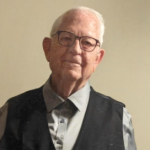
The two men
How the story began
Robert Storey joined the South Carolina Army National Guard on July 7, 1966. On August 22, 1966, he entered the United States Army and headed for basic training.
Storey told the newspaper:
“I knew this was an opportunity to learn to be a soldier for my country. But at 19, I was scared and unsure of what to expect.”
After approximately a week at a reception station—receiving examinations, shots, clothing, equipment, and basic orientation—Storey was sent to Tank Hill, the basic-training area at Fort Jackson, South Carolina.
He was assigned to:
- 2nd Battalion
- 1st Training Brigade
- Charlie Company
- 4th Platoon
Storey described arriving as “organized chaos,” with instructors shouting at the recruits as they left the trucks and formed ranks.
Meeting Lieutenant DeCuir
The company commander was introduced as First Lieutenant Lionel B. DeCuir. Storey remembered that DeCuir did not appear much older than the recruits, but his manner immediately separated him from everyone else.
According to the article, DeCuir spoke with:
- Authority
- Confidence
- A positive and motivational tone
- An unusually strong vocabulary
- High expectations for every recruit
Rather than merely criticizing the soldiers, DeCuir explained what was expected and motivated them to believe they could meet those expectations.
Storey recalled:
“The first noticeable difference I saw in him was the vocabulary he used when first addressing us.”
He also remembered DeCuir outlining what the soldiers would experience during each phase of training and giving them a sense that they could succeed.
DeCuir’s motivational talks
Storey said DeCuir addressed Charlie Company at the end of different training periods, telling the recruits where they stood in relation to the other companies in the battalion.
What began as status reports often became motivational speeches.
Storey said:
“Each address turned out to be a motivational speech.”
He believed DeCuir possessed the ability to bring out the best in the recruits and inspire them to believe that Charlie Company could become the best company in the training brigade.
During basic training, Storey may not have fully appreciated DeCuir’s influence. It was only after graduation—and as his own military career developed—that he recognized how much of his leadership foundation had been laid during those weeks.
A lifelong influence
Storey reportedly adopted DeCuir’s style of leadership throughout his military career. He wanted his own soldiers to perform their missions with confidence, proficiency, and a commitment to high standards.
He explained:
“I have always wanted to speak to DeCuir and thank him for his style of leadership.”
Storey wanted to tell DeCuir personally what an effect he had made upon his life and career. He especially remembered that DeCuir demanded excellence while still encouraging the soldiers under his command.
This is the central meaning of the story: a leader may influence someone profoundly without realizing it at the time.
The long search for “Waldo”
For approximately two years before the article appeared, Storey used the Internet to look for DeCuir.
His information was limited. He knew:
- The name Lionel DeCuir
- That DeCuir had lived in Texas before entering the service
- That DeCuir had commanded him at Fort Jackson in 1966
Storey encountered numerous dead ends. Eventually, he found a reference connecting a Lionel DeCuir with Waxahachie, but he could not locate a telephone number or address.
Still unwilling to give up, Storey contacted several organizations in the Waxahachie area. He finally sent an email to Debra Wakeland at the Waxahachie Chamber of Commerce.
Wakeland telephoned Storey and told him that DeCuir worked in the same building she did. Storey described that discovery by saying:
“The rest is now history.”
DeCuir learns that Storey found him
DeCuir was apparently away on vacation when Storey’s messages first arrived. When he returned, he learned that a soldier he had trained nearly 38 years earlier had been searching for him.
DeCuir was surprised and honored because he had not known the extent of his influence on Storey.
The article quotes DeCuir remembering the difficult historical circumstances of 1966. The Vietnam War was underway, and the soldiers passing through basic training faced the possibility of combat and death. That made the responsibility of preparing and motivating them especially serious.
DeCuir said Storey’s effort to locate him was:
“A big, big honor.”
He immediately contacted Storey. The two men spoke by telephone and planned to meet in person with their wives.
Storey’s message of gratitude
Storey’s message to his former commander was simple and powerful:
“Waldo, thank you for helping me to become the man I am today. Meeting you made a difference in my life.”
The article says Storey’s office in South Carolina contained reminders of his military career. One item that particularly impressed DeCuir was a displayed poem titled “I’d Like to Make a Difference,” attributed in the article to Helen Bush.
Its message expressed Storey’s desire to help the people he encountered, bring encouragement to others, and leave the world better than he found it. Its concluding thought was the hope that someone might someday say:
“You made a difference in my life.”
That poem reflected exactly what Storey was attempting to tell DeCuir.
The Time magazine shown in the photograph
The front-page photograph shows Lionel “Waldo” DeCuir holding the December 10, 1965, issue of Time magazine. According to the caption, he hoped to present it to Robert Storey when they met in person, reportedly planned for the summer of 2005.
The article does not clearly explain, in the visible portion, the personal significance of that particular issue. It may have related to the period immediately before their Army service connection or to subjects they discussed privately.
Why this article is important
“Finding Waldo” is not primarily a military-history article. It is a story about:
- Mentorship
- Leadership through encouragement
- Gratitude expressed decades later
- The lasting influence of words
- The early Internet’s ability to reconnect people
- A former soldier’s determination to thank someone who changed his life
The most remarkable part is that DeCuir apparently did not know Storey had remembered him for almost 38 years. DeCuir was simply carrying out his responsibilities as a young officer, yet his words became part of the foundation of Storey’s military career and personal philosophy.
The article also preserves an important piece of Lionel Waldo DeCuir’s personal history: long before his later community work in Waxahachie, he had already influenced people through motivational speaking, leadership, high expectations, and encouragement.
The historical existence of the newspaper and its archive can be independently confirmed through the Waxahachie Daily Light archive at NewsBank, the University of North Texas Portal to Texas History, and the Waxahachie Daily Light historical archive
waxahachietx.newsbank.com
Browse | Waxahachie Daily Light Archives
Browse | Waxahachie Daily Light Archives