-
32.BIRTH OF FEDERAL RESERVE-“A LOCKED DOOR, A SECRET MEETING AND THE BIRTH OF TH
COMMENTS FROM STREET TALK NETWORK ABOUT THIS POST-
1. Do your own research on the information provided and then come up with your own conclusions.
2. This article contains many names and other information that can be researched.
3. Trust your gut feeling on information provided as this post may contain slanted information.
The NPR report by Robert Smith and Jacob Goldstein was published on December 23, 2013—the 100th anniversary of President Woodrow Wilson signing the Federal Reserve Act. It recounts the remarkable but well-documented story of how a small group of politicians, Treasury officials, and powerful bankers secretly met on Jekyll Island, Georgia, in November 1910 to design a new American banking system.
The meeting did not literally enact the Federal Reserve Act, and the plan created there was not adopted unchanged. Nevertheless, it supplied much of the institutional and technical groundwork from which the Federal Reserve System eventually emerged.
Why banking reform was considered necessary
At the beginning of the twentieth century, the United States had thousands of largely independent banks but no permanent central bank. The country’s currency supply was comparatively inflexible: money and credit did not always expand when businesses, farmers, depositors, or banks urgently needed them.
This weakness became especially dangerous during financial panics. Depositors would rush to withdraw money, banks would hoard cash, credit would contract, and otherwise solvent institutions could collapse because they could not obtain emergency funds.
The immediate catalyst was the Panic of 1907. Runs on banks and trust companies threatened the financial system. Because the country had no central bank capable of acting as lender of last resort, financier J. P. Morgan helped organize private rescues of endangered financial institutions.
The crisis raised a fundamental question: Should the stability of the entire national economy depend upon voluntary action by one private financier?
Congress responded by passing the Aldrich–Vreeland Act of 1908, which provided for emergency currency and created the National Monetary Commission. The commission, chaired by Senator Nelson W. Aldrich of Rhode Island, was instructed to study banking systems and recommend reforms. Its members and advisers examined the central banks of Britain, France, and Germany.
The men at the secret meeting
The most strongly documented list contains six participants:
Benjamin Strong, then an official of Bankers Trust and later the first governor of the Federal Reserve Bank of New York, is sometimes identified as a seventh participant. Vanderlip’s later memoir placed him there, but Warburg and other accounts did not. Federal Reserve historians conclude that Strong probably did not attend, although he was involved in subsequent revisions and belonged to the participants’ wider circle.
Why the journey was kept secret
Aldrich understood that a banking plan visibly written by leading Wall Street bankers would encounter fierce public opposition. Americans had a long-standing distrust of concentrated financial power, central banks, and the influence of New York financiers over credit.
The participants therefore treated the trip almost like a covert operation:
- They arrived separately at a New Jersey railroad
terminal. - They boarded Aldrich’s private railroad car.
- They presented the journey as a duck-hunting
excursion. - They reportedly avoided using surnames in front
of servants. - They addressed one another by first names or
assumed names. - Warburg reportedly carried hunting equipment
despite not being a duck hunter. - Andrew did not tell his Treasury superior where
he was going. - The group traveled to the private Jekyll Island
Club off the Georgia coast.
Vanderlip and Davison allegedly called themselves “Orville” and “Wilbur,” after the Wright brothers, on the theory that the two bankers were “always right.” The circle consequently became known as the First Name Club.
These details are not merely later conspiracy folklore. Much of the secrecy was eventually acknowledged by the participants themselves. Warburg wrote that even the existence of the conference was not supposed to become public.
Why Jekyll Island was selected
The Jekyll Island Club was among the most exclusive private resorts in the United States. Its membership included people associated with the Morgan, Vanderbilt, Rockefeller, and other extraordinarily wealthy families.
The island offered precisely what Aldrich needed:
- Physical isolation
- Controlled access
- Privacy from reporters
- Comfortable accommodations
- Facilities where the participants could work
uninterrupted
A club member—Federal Reserve historians believe probably J. P. Morgan—arranged for the party to use the property.
The resort’s elite character is important. Critics reasonably point out that a group dominated by representatives of major financial interests was drafting a proposal that could profoundly affect the entire country. The secrecy avoided public scrutiny and excluded farmers, workers, small bankers, consumer representatives, and most elected members of the National Monetary Commission from the drafting process.
What happened behind the locked door
The men worked for approximately a week to ten days, reportedly from early morning until late at night. They were not simply discussing general ideas. They were attempting to prepare the structure of a workable central banking proposal.
Paul Warburg supplied extensive knowledge of European central banks. Aldrich contributed his knowledge of Congress and national politics. Davison, Vanderlip, and the others brought experience with American banks, clearing arrangements, commercial credit, reserves, and financial panics.
They agreed that the proposed institution should:
- Hold part of the reserves of participating banks.
- issue an “elastic currency” that could expand or
contract with economic needs; - rediscount eligible commercial paper;
- transfer balances between regions;
- improve check clearing and collection;
- supply emergency funds during financial
disturbances; - coordinate interest or discount rates;
- buy and sell certain securities; and
- reduce the probability that another banking panic
would require an improvised private rescue.
The difficult question was not simply whether the United States needed a reserve institution. It was who would control it: private bankers, elected government, presidential appointees, or some combination of the three.
The Reserve Association of America
The Jekyll Island proposal developed into what became known as the Aldrich Plan. It contemplated a single National Reserve Association with approximately fifteen regional branches.
Participating banks would own shares in the association and have a substantial role in selecting its directors. Larger banks would possess greater voting influence. Its regional structure was intended to answer objections that a purely centralized institution in New York would dominate the country.
The association would not have been merely another commercial bank. It would have performed central-bank functions for the banking system:
1. Reserve concentration: It would hold reserves deposited by member banks.
2. Currency issuance: It could issue notes in response to legitimate commercial demand.
3. Rediscounting: Banks could exchange qualifying short-term business paper for reserve funds.
4. Emergency support: It could provide liquidity when panic threatened solvent banks.
5. National coordination: It could transfer funds and coordinate policy across regional branches.
6. Payment processing: It would facilitate check collection and settlement among banks.
This was a major proposed transformation. Instead of leaving each bank largely dependent on its own cash and correspondent relationships, the plan would connect banks to a national reserve mechanism.
The relationship between the Aldrich Plan and the Federal Reserve Act
A crucial distinction is frequently lost in discussions of Jekyll Island:
The Jekyll Island group designed the Aldrich Plan, not the final Federal Reserve Act.
After the meeting, Aldrich became ill. Vanderlip and Benjamin Strong reportedly helped prepare and revise the proposal. Aldrich presented it to the National Monetary Commission in January 1911 without explaining its private origins. A formal commission report and proposed legislation reached Congress in 1912.
The Aldrich proposal encountered strong resistance. Democrats and progressives objected that its governance structure would give powerful banks too much control. Democrats repudiated the plan during the 1912 election, and Woodrow Wilson’s victory appeared to end it.
But the underlying banking problems remained. Democratic Representative Carter Glass of Virginia and Senator Robert L. Owen of Oklahoma developed a different proposal. Wilson also insisted upon meaningful federal supervision.
The resulting Glass–Owen legislation retained important features associated with the Aldrich Plan:
- regional reserve institutions;
- pooled bank reserves;
- an elastic currency;
- rediscounting of commercial paper;
- centralized coordination;
- national check-clearing functions; and
- emergency liquidity for the banking system.
The major change concerned governance and political control.
The final legislation therefore borrowed much of the earlier plan’s machinery while changing its political architecture. According to the Federal Reserve’s own historical account, many technical portions closely resembled the Aldrich proposal, while the control structure reflected a political compromise.
President Wilson signed the Federal Reserve Act on December 23, 1913. The regional Reserve Banks began operating in November 1914.
Was the Federal Reserve secretly created at Jekyll Island?
The most accurate answer is partly, but not literally.
It is correct to say that:
- The meeting happened.
- It was deliberately concealed.
- Its participants included major Wall Street
representatives. - They drafted a central-banking plan.
- The Aldrich Plan strongly influenced the eventual
Federal Reserve System. - The technical similarities between that plan and
the Federal Reserve Act are substantial. - The secrecy prevented normal public scrutiny of
the plan’s earliest drafting. - The participants initially denied or avoided
acknowledging the conference.
It would be misleading to say that:
- The participants possessed legal authority to
create the Federal Reserve. - The exact Jekyll Island plan became law.
- Congress merely rubber-stamped a privately
written document without changes. - The public and political debate between 1910 and
1913 had no effect. - Woodrow Wilson simply signed the original Aldrich
proposal. - The existence of the meeting, now openly
recognized by Federal Reserve historians, remains a disputed allegation.
The meeting was an influential private drafting conference, not the legal enactment of the Federal Reserve. Congress debated and substantially altered the proposal, particularly its governance. Nevertheless, describing Jekyll Island as merely an unimportant gathering would also understate its significance.
How the secret eventually became public
Journalist B. C. Forbes, who later founded Forbes magazine, reported the meeting several years afterward. His account initially attracted limited attention and was dismissed by some readers as an implausible story.
For approximately two decades, the participants did not publicly admit the full account. The story became more firmly established around 1930, following a dispute over who deserved credit for the Federal Reserve’s design.
Carter Glass had emphasized his own role in creating the system. That prompted Andrew, Vanderlip, Warburg, and others to describe their earlier work. Warburg published an extensive history comparing the Aldrich and Glass–Owen bills. Vanderlip later wrote that it was not an exaggeration to describe the Jekyll expedition as the occasion on which the eventual Federal Reserve System was conceived.
The late admissions provide important firsthand corroboration, although discrepancies remain—most notably the question of whether Benjamin Strong personally attended.
What the NPR article does especially well
The NPR report turns complicated monetary history into an understandable story. Its central image—the locked meeting room—captures the combination of legitimate economic reform, elite influence, and intentional secrecy.
Its strongest points are:
- It shows that the Jekyll Island meeting is
documented history, not a fabricated event. - It explains why the Panic of 1907 created
pressure for reform. - It identifies the secrecy as a political
strategy. - It demonstrates that bankers had a direct role in
drafting the Aldrich Plan. - It connects that plan to the Federal Reserve Act
without treating the two as identical. - It raises the enduring question of whether
experts insulated from public pressure should possess great influence over
monetary policy.
The article’s storytelling details should still be treated carefully. Some recollections were written decades after the event, and participants disagreed over such matters as the precise attendance list. The basic meeting, its purpose, and its influence, however, are well supported.
The larger issue: expertise versus democratic accountability
The Jekyll Island story remains controversial because it embodies a real institutional conflict.
Supporters of the meeting could argue that banking systems are highly technical and that experienced bankers were best equipped to design mechanisms for reserves, rediscounting, currency issuance, and emergency lending. The United States had suffered repeated panics, and existing institutions were plainly inadequate.
Critics could respond that the people most likely to benefit from a new financial structure should not design it in secrecy. The plan potentially gave large banks considerable influence over credit and national monetary conditions. Even if the participants believed they were serving the public interest, the absence of transparency created a serious conflict-of-interest problem.
Both propositions can be true: the participants possessed valuable expertise, and their secret dominance of the initial drafting process was democratically troubling.
Overall conclusion
The NPR article describes an extraordinary event that is now accepted as part of official Federal Reserve history. In November 1910, Senator Nelson Aldrich and five financial and governmental specialists secretly traveled to Jekyll Island. They concealed their identities, used a hunting trip as cover, and spent more than a week designing a national reserve institution.
Their Aldrich Plan failed politically because Americans feared that it would give Wall Street too much power. Yet its central technical ideas survived. Carter Glass, Robert Owen, Woodrow Wilson, Congress, progressive reformers, and banking interests reshaped those ideas into a system of twelve regional Reserve Banks supervised by a federal board.
The fairest conclusion is that the Federal Reserve was conceived in important respects at Jekyll Island but legally and politically created through the later congressional process. The secret meeting was neither a fictional conspiracy nor the entire story. It was a decisive, privately conducted first draft of the institution that became America’s central banking system.
Sources: NPR article, Federal Reserve History: Jekyll Island Conference, Federal Reserve Bank of Richmond historical study, and Federal Reserve Bank of Atlanta/FRASER historical overview.

npr.org
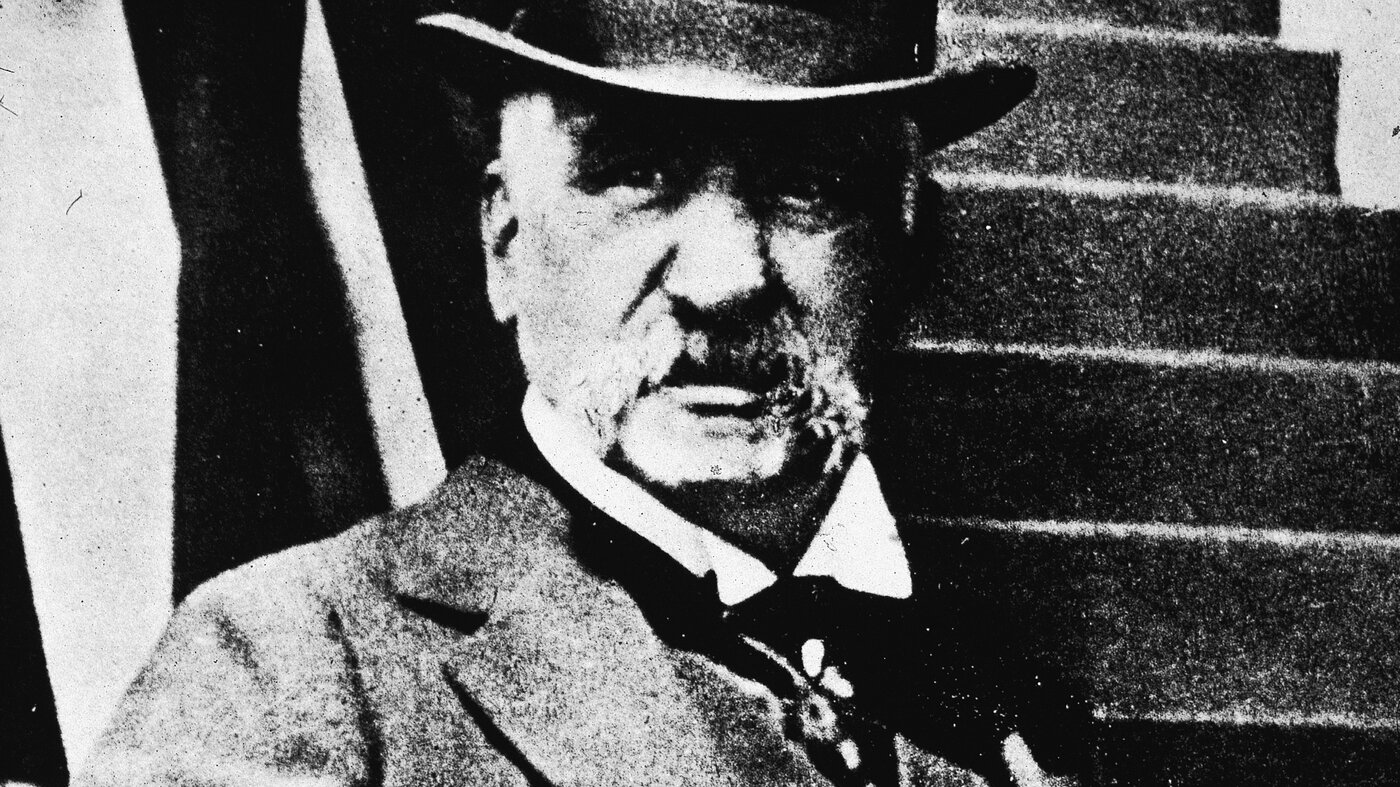
A Locked Door, A Secret Meeting And The Birth Of The Fed
The creation of America's central bank includes a bunch of bankers locked in a private library and a secret trip to a place called Jekyll Island.
- They arrived separately at a New Jersey railroad